

The Price of Fear: Why Iran’s Bomb is More Powerful Unbuilt

Celebration of the anniversary of the Islamic Revolution, February 2015
As volleys of bombs and ballistic missiles torch the Middle East, the US-Iran ceasefire is dead on arrival, with the rival states locked into a dangerous cycle of tit-for-tat escalation. The obvious conclusion is that peace is still out of sight and the United States has not accomplished its war goals. However, the US may have unwittingly secured the most prominent stated objective: preventing the emergence of a nuclear Iran.
Preventing Iran from acquiring a nuclear weapon is one of the stated objectives of the 2026 Iran War, and it has long been a central foreign policy dilemma that American presidents have had to navigate. American presidents have pursued two broad strategies to keep Iran from building the bomb: diplomatic engagement or coercion. While President Obama chose the carrot, negotiating the historic JCPOA agreement that kept Iranian uranium enrichment at a civilian-grade 3.67% in exchange for economic concessions, President Trump chose the stick, launching two wars against Iran in the span of a year.
Though Trump has been able to devastate Iran’s conventional forces, reduce its ballistic missile arsenal and damage its underground nuclear facilities, he has been unable to unseat the Iranian regime, win meaningful concessions or remove Iran’s stockpile of enriched uranium. It is absolutely true that the US has failed to eliminate Iran’s capability to build a nuclear weapon. It has, however, verified a core tenet of Iranian nuclear strategy: the bomb is more useful to Tehran before it is built.
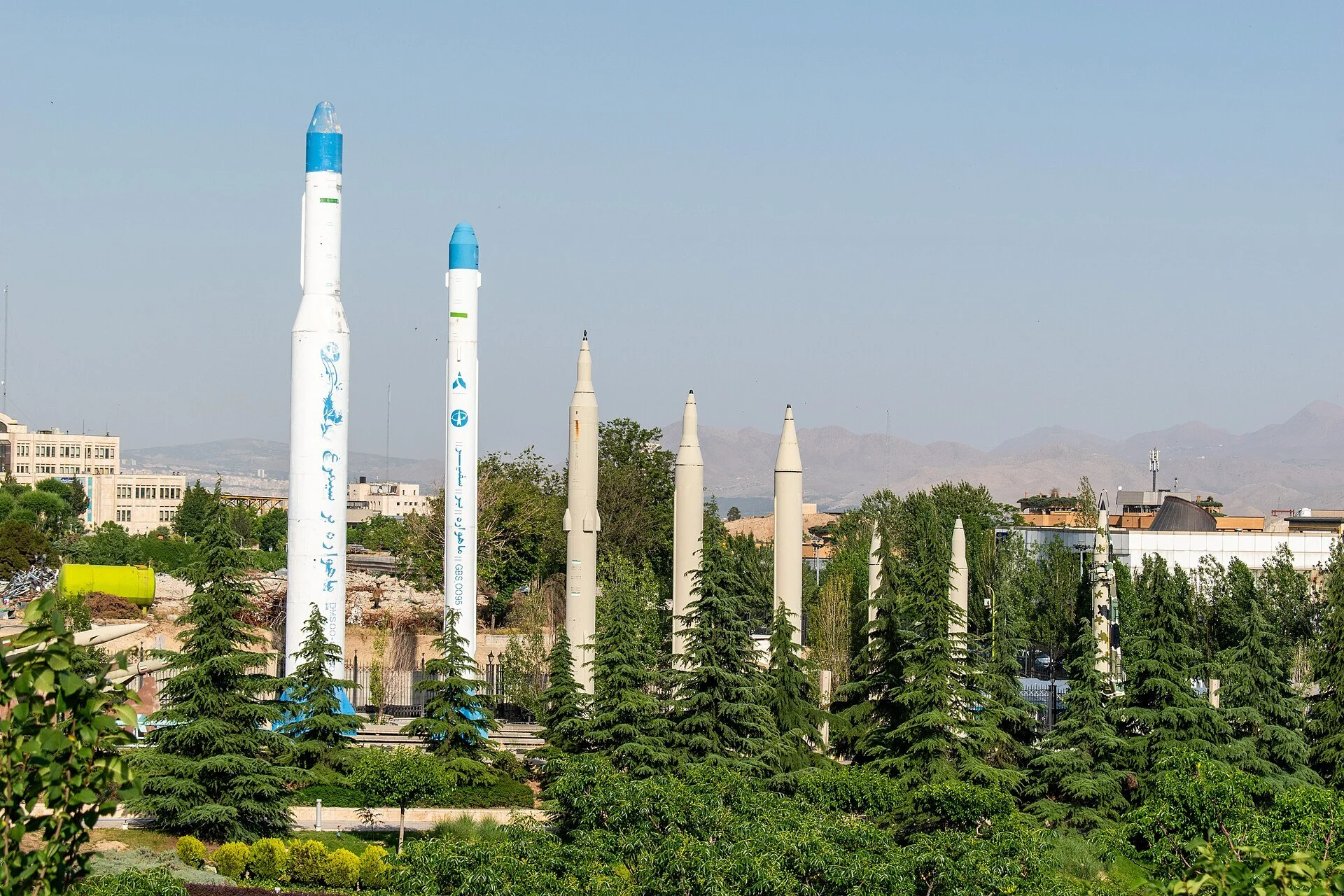
Missiles displayed in front of the Holy Defense Museum in Tehran, May 2024
To understand Iran’s nuclear strategy, one must first understand why there is so much fear around Iranian nuclear proliferation to begin with. From a strategic perspective, a state like Iran would want a nuclear weapon for two reasons.
First, Iran is a revisionist state, meaning it seeks to fundamentally alter the balance of power in the Middle East. This is evident in both its words and actions. Iranian propaganda frequently features calls of “Death to America” and “Death to Israel.” Whether or not one chooses to interpret those slogans literally, it is clear that unseating Israel as the region’s dominant power is an essential foreign policy ambition of Iran. Its actions confirm this. Iran funds militancies across the region, including: the Houthis in Yemen; Hezbollah in Lebanon; paramilitaries in Iraq; Hamas in Gaza. When these militants succeed, Iran’s position in the Middle Eastern playing field improves while Israel’s position weakens.
Second, Iran is much weaker than its adversaries. Even on its own merit, Iran has an extraordinarily weak economy and weak conventional military assets. That weakness is only accentuated when Iran is set shoulder to shoulder with its chief rivals, the US and Israel. The 2026 war confirmed this weakness: in a week of war, the US and Israel had gained air superiority over most of Iran, destroyed most of Iran’s navy, and killed the Supreme Leader, along with hundreds of other high-level Iranians.
Based on these two factors, Iran should be a serious nuclear threat. Nuclear weapons are made for weak states with grand ambitions. The bomb is the great equalizer, allowing otherwise feeble countries to pose an Armageddon level threat to their comparatively powerful adversaries. In other words, weak, revisionist states can use nuclear threats to bully their stronger rivals and extract concessions. Per this logic, Iran should be racing for a nuclear weapon. But that logic broke down after the 2026 Iran War refuted one of the central premises: Iran is not weak and it does not need nuclear weapons to win concessions from the US.
On defense, Iran decentralized its command and control, rendering the American-Israeli leadership assassination strategy ineffective. The durability of the regime even under intense American-Israeli fire proves that it does not need a nuclear deterrent to ensure state survival.
On offense, Iran demonstrated that its offensive posture did not rely on the conventional military. It shut down the Strait of Hormuz with fast boats, mines, missiles and drones, cutting off a fifth of global oil traffic and forcing Washington to the table. While discussing the Memorandum of Understanding (MoU), Trump himself admitted that the US would “run out of [oil] reserves at about four weeks.” It leveraged its alliance network to open a second front in Lebanon through Hezbollah. And it can strike Gulf energy infrastructure using its arsenal of rockets and missiles, generating near nuclear level deterrence by threatening attacks which could cause years of high oil prices and an environmental disaster. That’s why Iran was able to outlast Trump in a game of chicken over strikes on Kharg Island, paving the way for the April ceasefire.
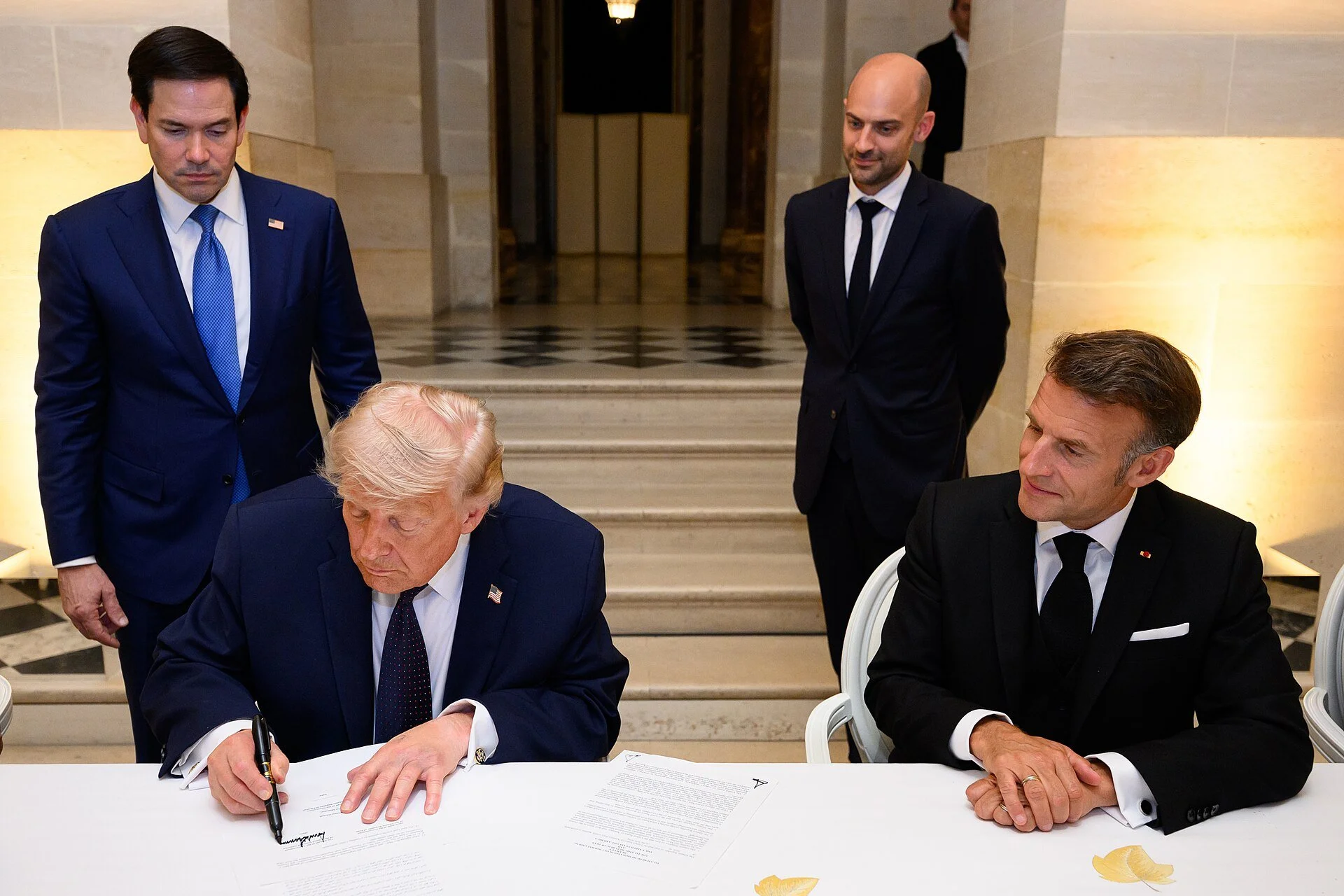
President Trump signs the Memorandum of Understanding between the US and Iran at the Palace of Versailles, France, June 2026
Iran has proven to itself and to the world that it can alter the regional balance of power without nuclear weapons. Though it is currently in peril, the MoU signed on June 17 confirmed Iranian leverage: among other incredible concessions, the agreement promised Iran a $300 billion reconstruction fund and an immediate waiver on Iranian oil exports.
While it is uncertain whether the terms of the MoU will come to fruition, the fact that the Trump administration went from being the first American government to actively fight a war with Israel to icing Israel out of negotiations and agreeing to economic concessions multiple times greater than Obama’s nuclear deal (which Trump left due to concerns that it gave Iran “pallets of cash”) proves Iranian leverage. A state with a broken economy, little air protection and no navy extracted concessions from the most powerful country on Earth. And it accomplished that without nuclear weapons.
In fact, Iran’s lack of a nuclear arsenal actually gives it more leverage in negotiations. Scholars of international relations like Tristan Volpe call this nuclear latency. The threat of proliferation can win concessions from rivals that an actual nuclear weapons arsenal cannot. Once it’s built, a nuclear weapon can only deter. Conversely, an unfinished nuclear weapon can be traded away at every round of negotiations. Put simply, an unbuilt nuclear weapon is a terrific bargaining chip. Iran ran this play successfully with both Obama and Trump—in exchange for agreeing to limit uranium enrichment, Tehran received major sanctions relief in both the JCPOA and the June MoU.
For Iran, the threat of proliferation is a two-sided instrument, functioning as both a diplomatic carrot and a stick. It agrees to suspend proliferation to appease the US and win economic concessions. It publicly ramps up proliferation efforts when the US turns up diplomatic or military pressure.
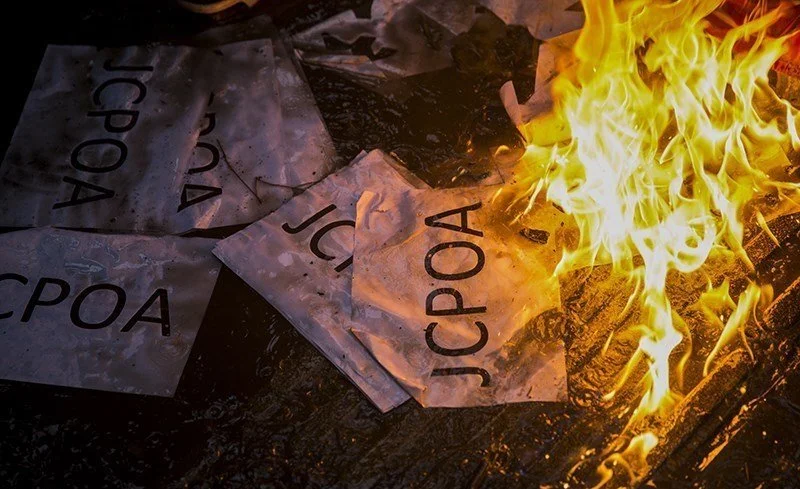
Protest in Tehran after US withdrawal from the JCPOA, May 2018
After Trump left the JCPOA in 2018, Iran increased uranium enrichment from 3.67% to 60% in protest, putting it in striking distance of a nuclear bomb, yet it did not take the final steps to acquire a weapon. Similarly, after the ceasefire collapsed this month, Iran reclosed the Strait of Hormuz, struck US bases in the Gulf and began reconstructing nuclear sites. If Iran truly endeavored to acquire a nuclear weapon, it would take all possible measures to hide the evidence. The reconstruction efforts are almost certainly a negotiating tactic to put pressure on the US. If and when the warring states come back to the table, Iran may “reluctantly” halt these reconstruction plans in exchange for economic concessions that it can use to rebuild its military, finance its alliance network and prepare for the next geopolitical conflict. If that comes to pass, it is not a US victory. It is simply a repeat of Iran’s most reliable playbook—nuclear leverage dressed up as concession.
Iran has long benefited from American-Israeli nuclear anxiety, and the 2026 Iran War has only vindicated this strategy. Though the conflict is far from over, the June 17 MoU was a proof of concept. Iran closed the Strait of Hormuz without a navy, survived leadership decapitation through decentralization and extracted historic concessions from America using an unbuilt nuclear warhead. Washington set out to stop Iran from building a nuclear weapon. It proved Iran never needed to.
All images sourced from Wikimedia Commons under Creative Commons 4.0 License
