

Why Can’t the United States Reopen the Strait of Hormuz?

US Sailors aboard the USS William P. Lawrence preparing to assist a burning ship transiting the Strait of Hormuz in 2013
Why is it so hard for the United States to “open” the Strait of Hormuz? Every American is aware of the increase in gasoline prices in the last month—they have gone up about 30% since the United States and Israel attacked Iran—and most Americans are at least somewhat aware that the reason for this increase in prices has to do with the “Strait of Hormuz” being closed. But exactly why the strait is so important, and why the United States military, despite being overwhelmingly dominant in any single engagement with the Iranian military, cannot protect ships transiting the strait, is not so clear. The aim of this article is to explain, in simple terms, why ending Iran’s stranglehold on the world’s economy is so difficult, and why the United States is unlikely to succeed in efforts to reopen the strait that rely on military options.
First, what exactly is the Strait of Hormuz? The Strait of Hormuz is a narrow waterway that separates the Persian Gulf from the Gulf of Oman and the Indian Ocean. It is vital for the export of goods of all kinds from the Middle East to the rest of the world, including oil, natural gas, fertilizer, and helium, among other industrial products. Disruption of the Strait has caused, and will continue to cause, shortages and increases in prices of all these goods, which will become worse over time.
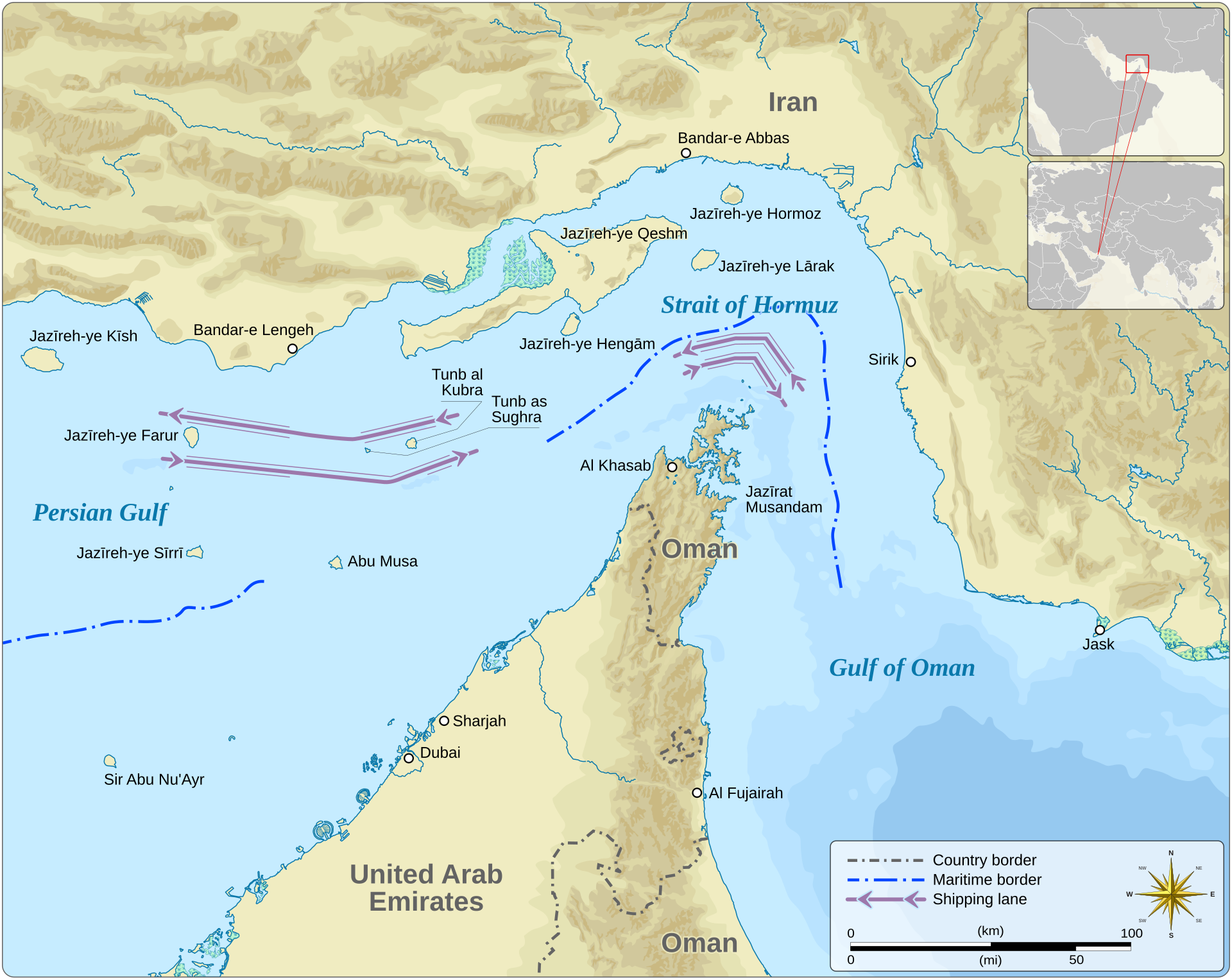
Map of the Strait of Hormuz
Second, the Iranians have plenty of weapons they can use to menace the strait. Ships transiting the strait are never more than 60 miles away from the Iranian coast, and at the narrowest point ships must come within 24 miles of Iran. This puts every ship that transits the strait within easy reach of even Iran’s short-range weaponry. For example, Iran’s Shahed drone, which has seen extensive use in Russia’s war against Ukraine, has a range of 1,000 miles and costs between $20,000 and $50,000 to produce. Additionally, it can be launched from the back of a modified commercial truck. This combination of geography and technology affords Iran great flexibility in the deployment of the Shahed to target ships in the Strait—and this is not accounting for the threat of missiles, drone ships, or mines, each of which adds to the dangers. This is how Iran is able to continue to threaten ships in the strait even after the destruction of their conventional navy.
Third, a commercial oil tanker is incredibly vulnerable. While they are difficult to sink outright, they are slow, unarmored, and do not have effective countermeasures. The consequences of this are obvious when we look at the attacks that have already taken place in the strait: a Thai freighter was attacked by two “projectiles” (which in this context likely means a Shahed), and that was sufficient to kill three crew and set fire to the ship.
Fourth, and most important, is value of potential losses. The average cost of an oil tanker is around $129 million. This was just the cost of the ship and does not account for the cost of the cargo (or the value of the crew). The value of the ship’s cargo depends, but will range between $100 and $200 million dollars, and higher when the price of oil is high. The total value at stake can be upwards of $400 million.
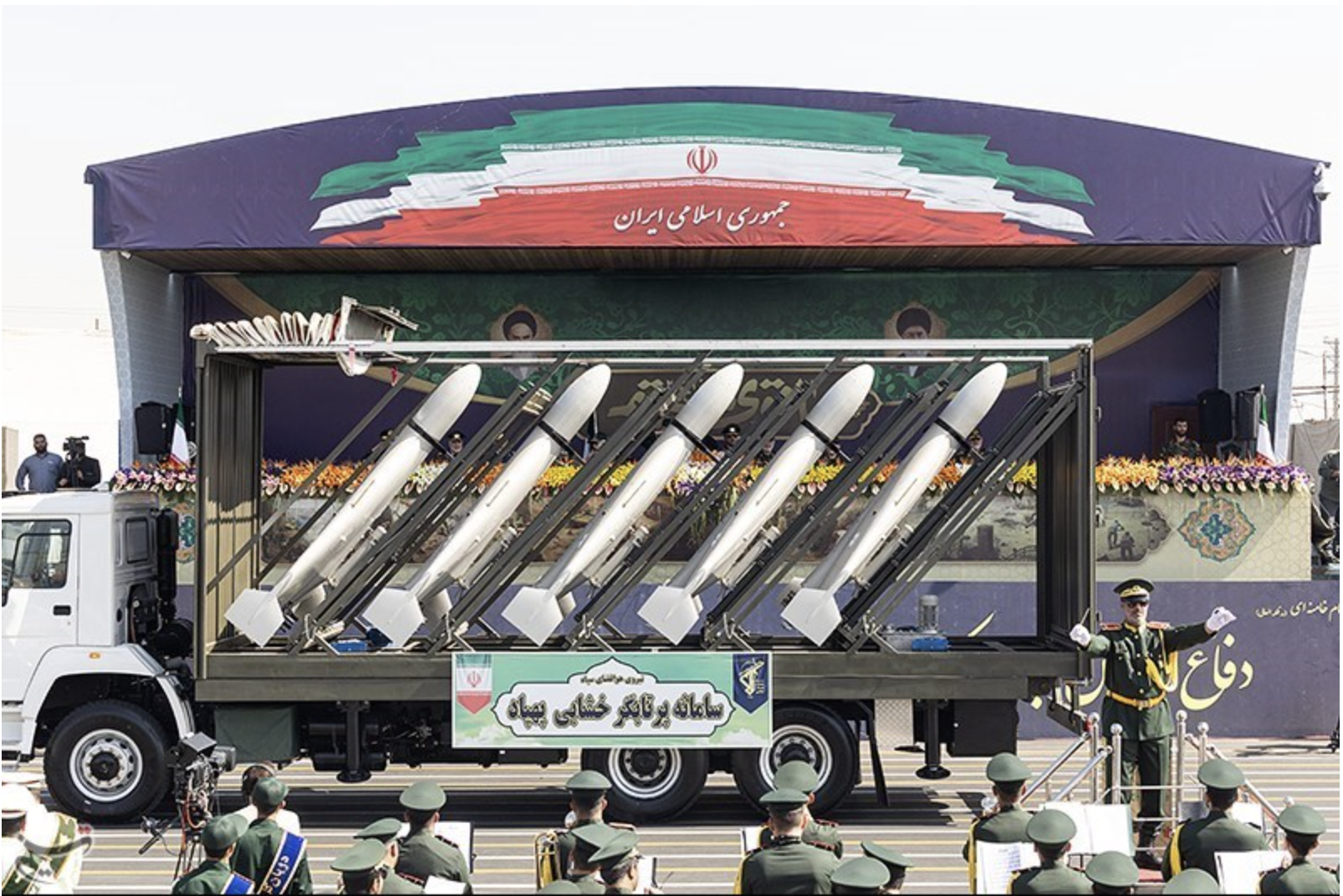
Shahed drones pictured in Iran during the Sacred Defense Week military parade
Losing a ship at sea is thus prohibitively expensive for its operator. To hedge against those risks, each voyage is insured. Before the onset of hostilities, an operator could purchase insurance for a voyage at approximately 0.25% of the value of the ship, but those rates have increased significantly since the beginning of the conflict. Ultimately, it is the unwillingness of insurance companies to risk having to pay out claims that closes the strait. If the Iranians can hit a ship occasionally—it does not need to be a constant threat—those insurance companies are going to demand exorbitant premiums to sell a policy. This is why President Trump proposed U.S. government insurance to replace private insurance for freighters, a proposal which has no realistic chance of success and would merely move the cost of losses to the U.S. taxpayer. Even if the U.S. navy can be deployed to the strait to protect tankers from Iranian attacks, just the threat will be enough to deter many commercial ships going through.
These four factors mean that Iran can target ships in the strait with relatively low-cost weapons that are easy to deploy, difficult to stop, and can do significant damage to their targets, thus limiting commercial shipping.
A major intensification of U.S. military force in the Persian Gulf is unlikely to fundamentally change this calculus. Eliminating the Iranian military threat completely is difficult at best and impossible at worst, and even an intermittent threat puts enormous pressure on shipping in the strait. Ultimately, resolving this crisis and restoring global economic activity to the prewar norm is going to require making concessions to the Iranian regime.
All images sourced from Wikimedia Commons under Creative Commons 4.0 License