

Meet the Newest Candidates for UN Secretary General
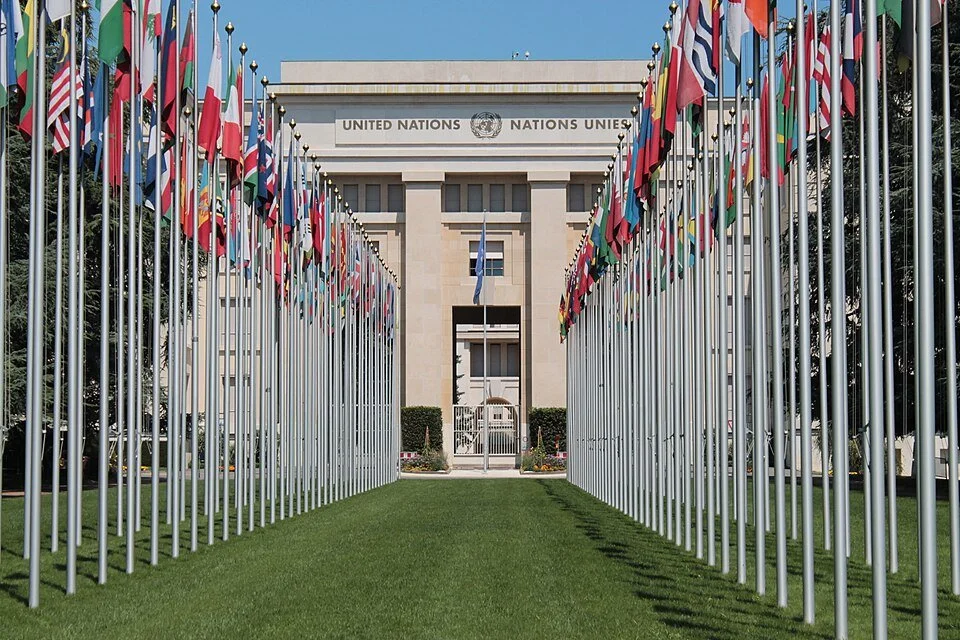
United Nations Headquarters in Geneva, July 2018
Two new candidates have entered the race to become the next United Nations Secretary-General (UNSG). Although nations were invited to nominate candidates by early April, there is no formal rule prohibiting new candidates from declaring after the date. So who are the new contenders and why are they running?
Nominated by Antigua and Barbuda, María Fernanda Espinosa Garcés declared her candidacy for UNSG in May. Espinosa Garcés is currently the executive director of GWL Voices, an organization created to develop a gender-equal international system and put women’s rights at the center of the international system. Previously, she was the President of the United Nations General Assembly from 2018 to 2019, Ecuador's Minister of Foreign Affairs (2007-2008; 2017-2018), ambassador and permanent representative to the U.N. (2008-2009; 2014-2017), and Minister of National Defense (2012-2014).

María Fernanda Espinosa Garcés meets with the press, July 2007
Likely heeding calls from the United States and responding to the U.N.’s financial crisis, Espinosa Garcés has said, "we can shrink the U.N. responsibly, while strengthening national ownership and delivery, and restoring faith in the U.N." This is consistent with her vision statement, which calls for the U.N. to deliver on its promises in order to rebuild global trust in the organization.. Espinosa Garcés, like Macky Sall and Michelle Bachelet, does not have the support of her own home country, a challenge that a successful UNSG candidate has yet to overcome. Espinosa Garcés served in former Ecuadorean President Rafael Correa’s administration, the leader of the country’s leftist political party. Despite her attempts to distance herself from the party, the current right-wing Ecuadorean government has yet to support or oppose her candidacy.
Carolyn Allison Rodrigues-Birkett is the most recent candidate to declare their candidacy for UNSG. She was nominated by the President of Guyana on June 15, 2026. Her experience includes being Minister of Amerindian Affairs in Guyana (2001-2008), Guyana Minister of Foreign Affairs (2008-2015), and Permanent Representative of Guyana to the United Nations (2020-present).
While Rodrigues-Birkett has deep institutional knowledge of the U.N., she has much less executive experience in international organizations compared to the other candidates. Her vision statement offers few concrete solutions to the challenges she identifies. On top of this, her candidacy was filed five days after the U.N. hosted a debate in Geneva with the other candidates, a missed opportunity for Rodrigues-Birkett to introduce herself to the public and civil society organizations. The delayed introduction of her campaign and her vague stances could be a reflection of her inexperience as the youngest candidate in the race. However, it is possible that these decisions were calculated.
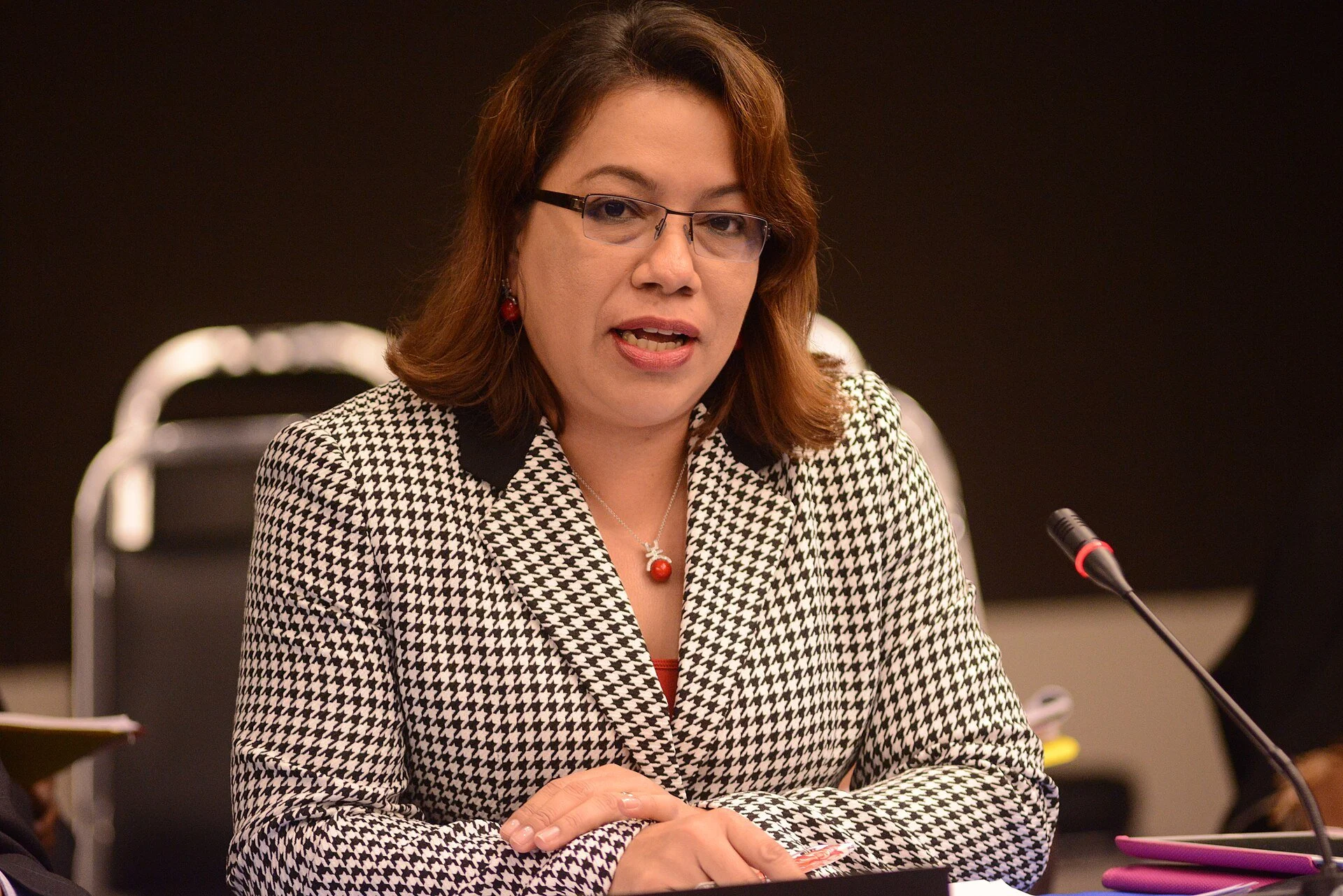
Carolyn Allison Rodrigues-Birkett at the 154th Regular Session of the Inter-American Commission on Human Rights (IACHR)
Rodrigues-Birkett’s late entry to the UNSG race offers her several unique advantages. First, it has allowed her to avoid public scrutiny for a longer time. Now that several candidates have participated in their lengthy Interactive Dialogues (a public interview process for UNSG candidates), Rodrigues-Birkett has had additional time to prepare and anticipate questions that national representatives may ask her. Her delayed entrance also allowed her to avoid answering tough questions or making definitive stances on controversial issues that could jeopardize her candidacy. This can be beneficial given that the UNSG selection process is dependent on complex geopolitical realities, not a democratic election.
Second, her vague stances allow the Permanent Five members of the U.N. Security Council to choose a candidate who will not rock the boat. The lack of a grand vision or a large number of solutions may be appealing for the great powers who want to work with the United Nations, but do not want it to have a more active role and undermine its national interests. Additionally, her two one-month terms as President of the U.N. Security Council in February 2024 and June 2025 could offer an added benefit of a predictable record for the great powers to analyze.
One possible explanation for Rodrigues-Birkett’s candidacy is that it is an opportunity for Guyana to exert influence on the international stage. Currently, Guyana is a small nation that has fostered ties with the United States and has disputed territorial claims with its neighbor Venezuela over the Essequibo region. These territorial disputes have been taken to U.N. courts for mediation and the small South American country likely wants to court international opinion to their side. By offering a “safe option” for the international community, Guyana may be able to elevate its status in the international community and combat Venezuela’s expansive claims on Guyanese territory.
The introduction of two new candidates for UNSG who both have a strong understanding of the United Nations and multilateral organizations could suggest that they believe that there is no clear consensus among the U.N. Security Council as to who they want to select as the next U.N. Secretary-General. The geopolitical realities of today’s world order make the selection of the next U.N. Secretary-General one of the most contentious in recent memory. It is still possible that the next U.N. leader has still not declared their candidacy. But as the month comes to an end, the members of the U.N. Security Council will begin having discussions behind closed doors and will vote through informal, secret-ballot straw polls. Once that process is over, the Security Council will recommend the nomination of a candidate to the General Assembly and the next “secular pope” will be inaugurated.
All images sourced from Wikimedia Commons under Creative Commons 4.0 License