
How the MAGA Doctrine is Influencing the Race for UN Secretary General

President Trump shakes hands with UN Secretary General Antonio Guterres at the United Nations headquarters in New York City, September 2018
Most Americans believe that the impact of issues like abortion or DOGE are confined to domestic US politics. However, even the most educated voters may not realize the extent to which these ideologies affect the Trump administration’s foreign policy priorities. There is no clearer example of this dynamic unfolding than how the United States is approaching the election of the next U.N. Secretary-General (UNSG).
As the top funder and most influential actor within the United Nations, the United States has an active stake in who becomes the next UNSG. Wielding veto power on the United Nations Security Council, U.S. Presidents have historically influenced the UNSG process based on their personal and political priorities. For example, Clinton’s choice to cast the U.N. Security Council’s sole nay vote on Boutros Boutros-Ghali’s reelection bid in 1996 was partly a political choice to boost Clinton’s own reelection chances due to the U.N.'s mismanagement of several crises. The Bush administration’s concern of a strong Secretary-General and dissatisfaction over Kofi Annan on his views of the Iraq war led Condoleezza Rice and John Bolton to veto Shashi Tharoor, forcing the perceived Annan protege to withdraw from the 2006 UNSG race. In 2016, Obama exerted little influence outside of encouraging (but not forcing) member-states to nominate women.
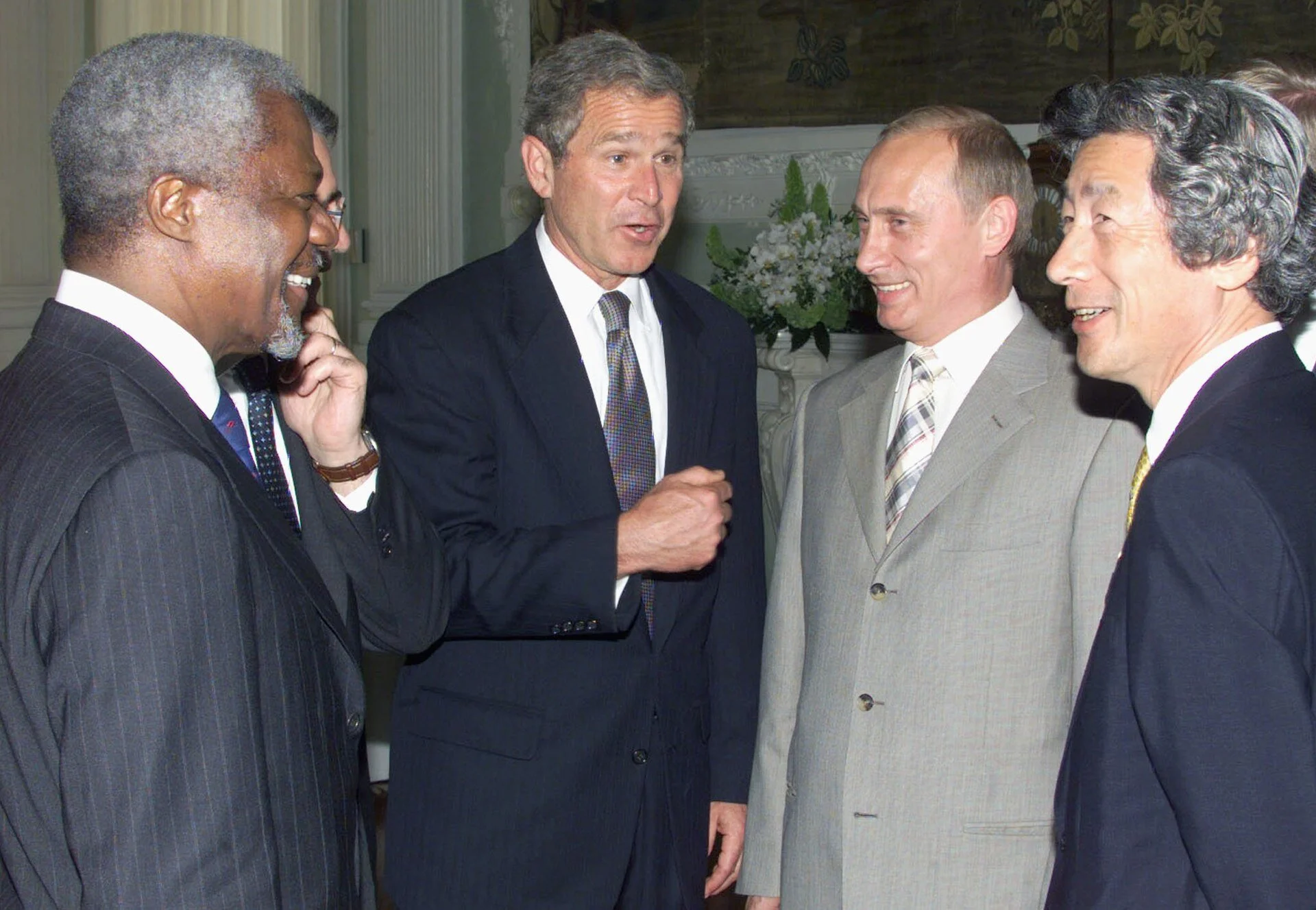
UNSG Kofi Annan, President George Bush, President Vladimir Putin, and Prime Minister Junichiro Koizumi (left to right) in July 2001
While it is not unusual for Presidents to shape the UNSG election, Trump's leverage over this year’s UNSG election is unique because his administration is ideologically opposed to liberal internationalism. To Trump and his supporters, the United Nations as well as other international organizations have been captured by foreign interests that insist on imposing progressive, liberal values that weaken America in the name of promoting human rights and international law. This worldview has allowed President Trump to justify the withdrawal of the U.S. from several U.N. agencies that his team believes do not serve American interests. If Trump seeks to continue these disruptions, he has the ability to turn this year’s UNSG election into a watershed moment for the U.N. by cementing a return to great power politics at the expense of multilateral diplomacy. This begs the question: who are the members of Trump’s MAGA coalition who will affect this race and what do they want in the next U.N. Secretary-General?
Outside of President Trump, both U.S. Secretary of State Marco Rubio and U.S. Ambassador to the United Nations Mike Waltz have an outsized influence on who the United States will or will not veto. The two China hawks have strong opinions about the United Nations and have not been shy to voice their concerns about the international organization.

Secretary Marco Rubio and Ambassador Mike Waltz at a press conference in Jeddah, Saudi Arabia, March 2025
In Secretary Rubio’s impassioned speech at the Munich Security Conference earlier this year, he lamented that the United Nations is nowhere to be found in the world’s most pressing conflicts. The speech echoed many of the themes from the U.S. 2025 National Security Strategy, which argued that the U.S. should place its national interests over the preservation of a rules-based international order. Rubio’s hostility towards international laws stems from his commitment to U.S. hegemony and his belief that America’s enemies use international institutions to evade consequences. As a result, the United States has relied heavily on unilateral hard power over multilateral diplomacy during Rubio's tenure as Secretary of State. Rubio's statements and actions suggest that he views the U.N. not as a neutral organization, but as an arena for great power competition where the U.S. must secure and maintain its influence. It is thus a given that UNSG candidates will face Rubio's resistance if they do not make it clear that they will respect American sovereignty and interests.
Ambassador Mike Waltz’s views on the U.N. are largely similar. Though members of the Republican caucus have advocated for the U.S. to withdraw from the United Nations, Waltz admitted in a testimony that the United States cannot leave completely since China or Russia would simply reinvent a similar institution, suggesting that maintaining U.S. influence in the organization is critical for him. His Senate confirmation hearing emphasized the need for reforms, especially around the U.N.’s bureaucracy and core missions. He has repeatedly criticized the organization’s budget priorities, denouncing the fact that the U.S. pays for most of the U.N.'s activities and gets noticeably little in return. Waltz has been a staunch advocate for President Trump’s funding cuts and withdrawals from U.N. agencies, celebrating the fact that the U.N. recently cut its budget for the first time in 80 years by proclaiming: “we are doge-ing it.” Thus, it is no surprise that Waltz wants to see the next UNSG seek reforms to return the U.N. to its core duties of peacekeeping over idealistic, liberal policy implementation.
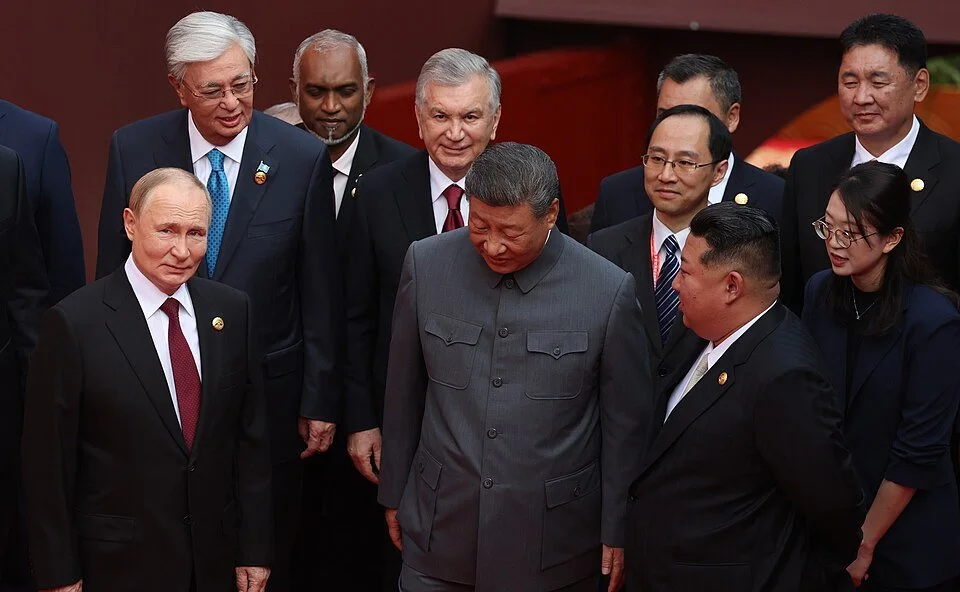
World leaders, including Vladimir Putin, Xi Jinping, and Kim Jong Un attending the 2025 China Victory Day Parade in Beijing
Although the two U.S. diplomats have not stated their preferred candidate, congressional Republicans have already begun flexing their muscle to influence the UNSG race. In March, twenty-eight U.S. members of Congress signed a letter written to Rubio and Waltz urging the United States to veto UNSG candidate Michelle Bachelet. The letter calls Bachelet a “pro-abortion zealot” that has prioritized an extreme abortion agenda over national sovereignty in her previous positions and makes brief mention of Bachelet’s unwillingness to firmly condemn China’s genocide of the Uyghur Muslims. Both Rubio and Waltz have reportedly shared similar concerns about Bachelet. For context, Bachelet’s abortion agenda as the former President of Chile included a law that legalized abortions in cases of rape and a threat to the life of the mother. However, she has also asserted that she would use her post as UNSG to ensure that the decisions of the U.N. Committee on the Elimination of Discrimination Against Women (CEDAW) are implemented. CEDAW has said that abortion must be decriminalized in all circumstances which opponents say allow for abortions up until birth.
When reading between the lines, MAGA’s resistance to Bachelet’s nomination could also suggest that the United States may not be interested in selecting a left-wing or center-left leader to head the United Nations. This could spell trouble for Rebeca Grynspan, who was the Vice President under a center-left leader and was nominated by Costa Rica’s left-leaning government before a right-wing government took power. Like Bachelet, Grynspan also has analogous views on abortion, previously condemning Nicaragua for enacting a law prohibiting abortion in all circumstances. Similarly, Maria Fernanda Espinosa, the most recent candidate to enter the UNSG race, also served under a leftist ruler in Ecuador. Given the politicized nature of the United States foreign policy, Grynspan’s and Espinosa’s ideological affiliation could jeopardize their chances in the same way Bachelet’s candidacy faces a veto threat from the U.S.
While other countries want to see the first female UNSG, the Trump administration does not seem as invested on this particular issue. This might hint that Rafael Grossi is the U.S.’s most viable candidate. Grossi’s vision statement almost seems tailor made for getting the backing of the United States. His willingness to talk to all parties, including aggressors in conflicts, could satisfy the realist tendencies of the Trump administration. He calls for reforms in the U.N.’s bureaucracy to eliminate duplication and explicitly mentions that the United Nations must return to its founding promise to save humanity from the scourge of war. Mr. Grossi has also been backed by Argentine President and Trump ally Javier Milei, which will certainly help Grossi avoid a potential veto from the U.S.
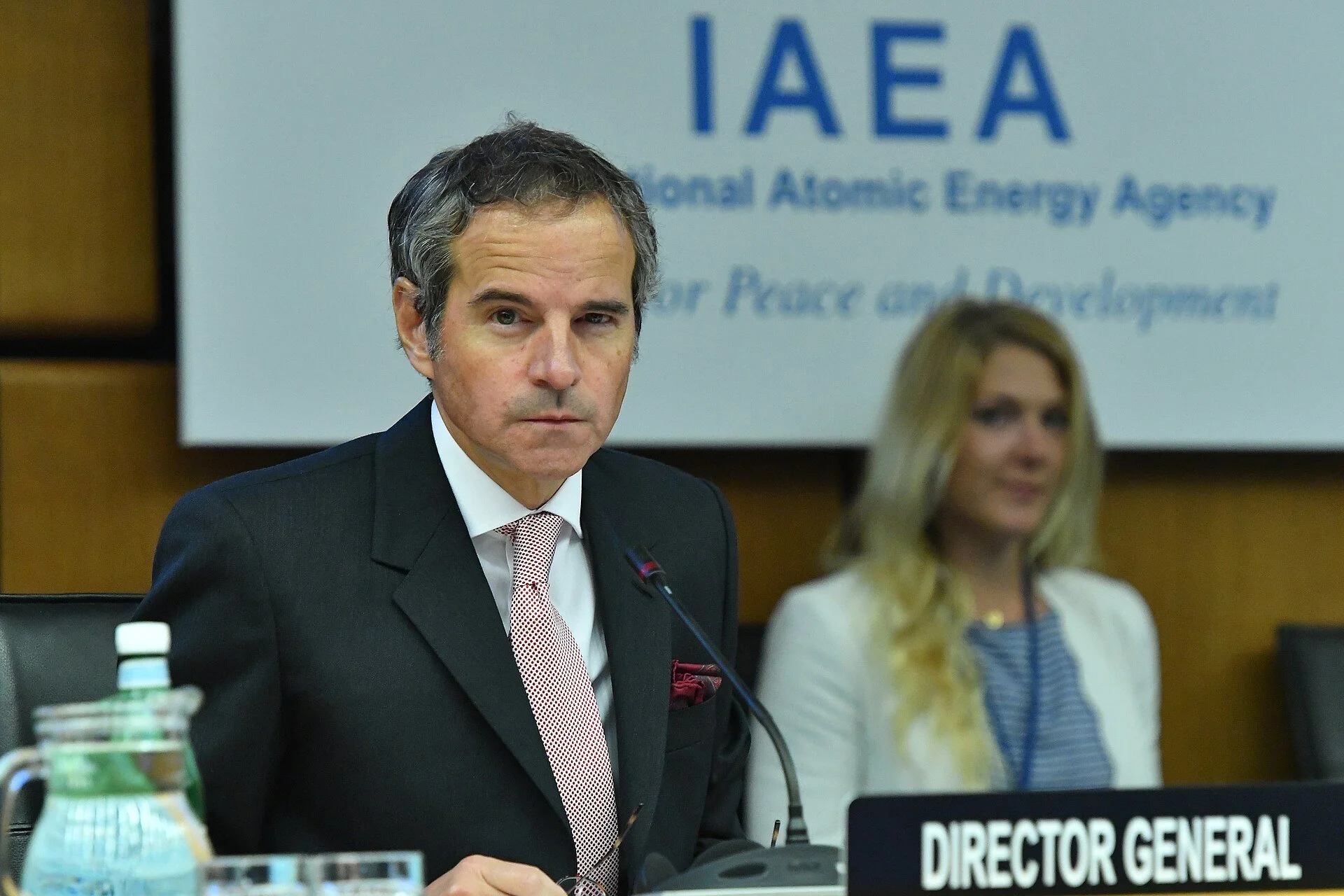
Rafael Grossi at IAEA meeting at Agency headquarters in Vienna, June 2020
Regardless, candidates that are seeking the U.N.’s high office will likely face what Americans know too well — an ideological litmus test to pledge their acquiescence to President Trump. Thus, the UNSG candidates who placate MAGA’s nationalist, pro-life, and DOGE tendencies will have a stronger case for convincing Washington that they should be the next UNSG. The nature of the MAGA’s attitude towards the international world order makes the U.S. objective for their vote on the UNSG clear: the Trump administration’s top choice will be whoever they believe will best trim the U.N.’s bureaucracy, avoid overtly liberal policy agendas, and put America first.
All images sourced from Wikimedia Commons under Creative Commons 4.0 License