

Quid Pro Quo in Beijing: How Trump will Trade Taiwan for Iran

President Trump greets President Xi Jinping at Gimhae International Airport in October 2025
President Trump is meeting Chinese President Xi Jinping in Beijing this week. The summit has wide-reaching global stakes, chief among them being the Iran war. Xi will have the leverage in this encounter—Trump is desperate to extricate himself from the garbage fire that is the Iran war and China can influence the Iranian regime. What is Xi’s asking price? Only he can answer that question precisely, but it definitely concerns Taiwan.
Xi Jinping’s utmost ambition is the reunification of China and Taiwan. The government of the People’s Republic of China (PRC) has laid claim over the island since it broke away and became the Republic of China (ROC) in 1949. Moving towards reunification has been the center piece of Xi’s foreign policy; during his New Year’s speech, the Chinese president announced that “the reunification of our motherland, a trend of the times, is unstoppable.”
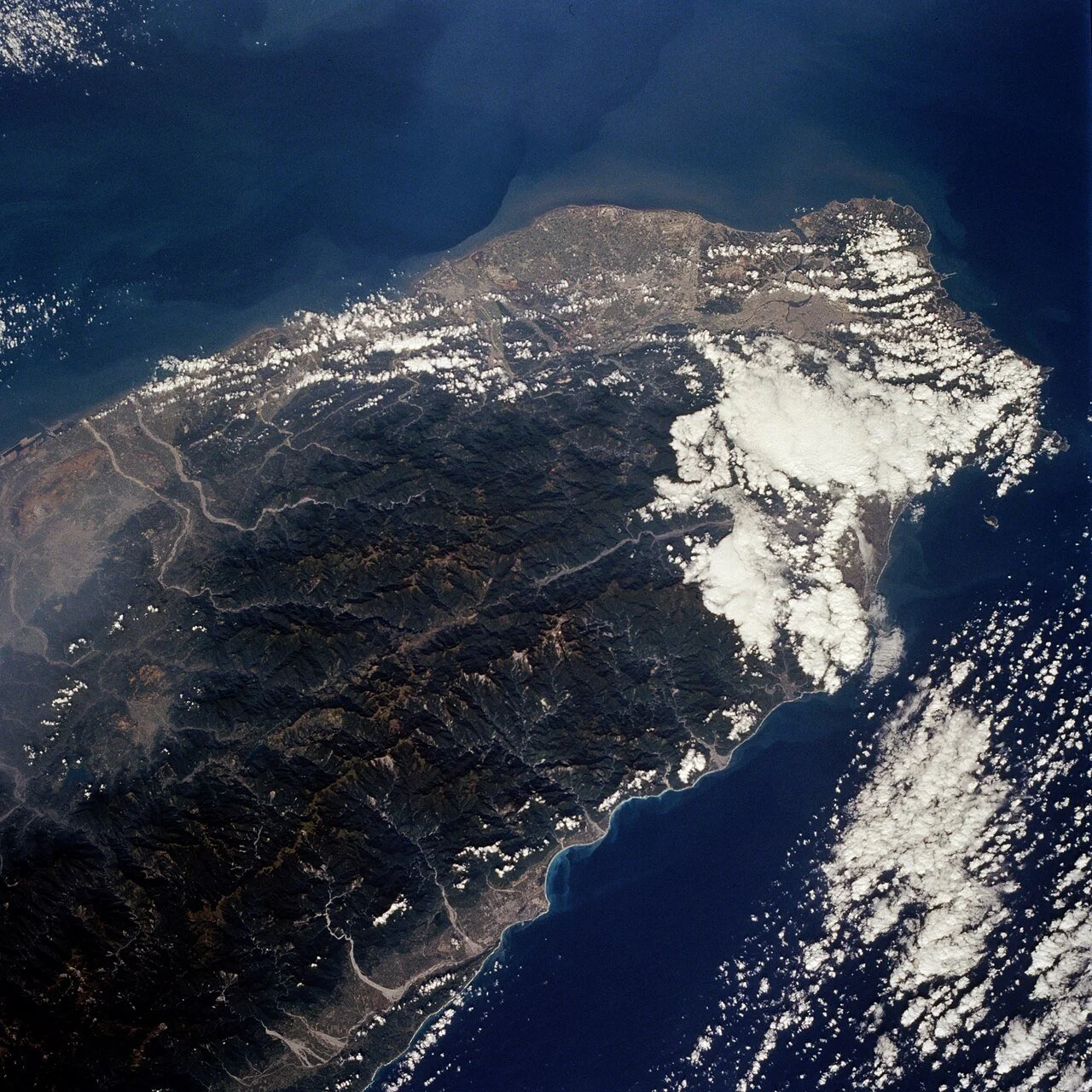
Northern half of Taiwan as seen from STS-66
China has not ruled out the use of military force to achieve their goal of reunification, piquing the fears of China hawks in the US. Unlike the US, though, military force is not China’s preferred tool for conducting foreign policy. China’s last major war lasted three weeks in 1979, when they invaded Vietnam. The Chinese would much prefer to win the war over Taiwan without using their armed forces, particularly since they believe that Taiwan is part of their nation. The Chinese do not want to spill the blood of their brothers and sisters.
China’s diplomatic gambit in Taiwan centers on the Taiwanese opposition party. There are three important parties in Taiwan: the Kuomintang (KMT), the Democratic Progressive Party (DPP), and the nascent Taiwan People’s Party (TPP). For the purposes of this article, I will focus on the two largest parties—the KMT and the DPP.
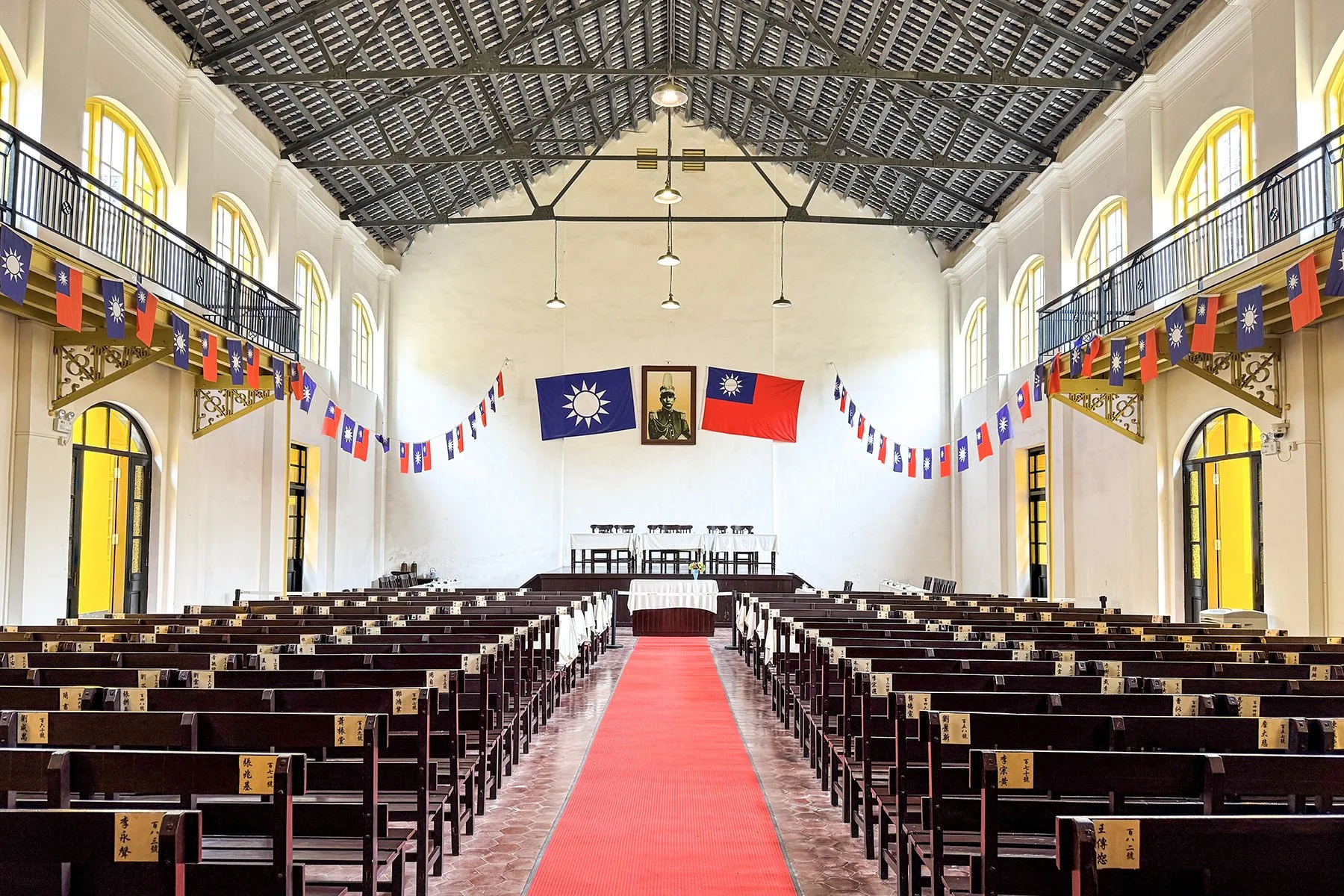
Site of the First National Congress of the Kuomintang
The dividing line in Taiwanese politics is its relationship to China. The KMT believes that Taiwanese people are Chinese, subscribing to a “one nation two systems” framework. While they historically take issue with the government of mainland China, they do not profess a unique Taiwanese national identity. Their worldview has earned them positive labels like “pragmatic” and “stabilizing” and negative ones like “pro-China.”
The DPP, on the other hand, is firmly Taiwanese nationalist, pushing for sovereignty and recognized independence from the PRC. The DPP argues that Taiwan is a distinct nation from China, possessing a unique history, democratic political principles, and its own local languages. Detractors contend that the DPP is dangerously escalating tensions between Taiwan and China. The current Taiwanese president, Lai Ching-te, belongs to the DPP.
China has pursued a policy of courting the KMT to promote its view of how cross-strait relations should be conducted. The relationship between the KMT and the CCP has grown rapidly in the last few months. KMT Chairwoman Cheng Li-wun concluded an unprecedented meeting with President Xi Jinping in Beijing this April. While relations between Taipei and Beijing have deteriorated since Lai Ching-te’s ascension to the presidency, Cheng Li-wun is outspoken in her preference for integration between Taiwan and China and her belief in a shared Chinese-Taiwanese national identity. The KMT also successfully blocked a $40 billion request from President Lai to improve defense, with only 2/3rds of the funding being approved. If Xi can propel the KMT back into power, he will have secured a great success in his long-term reunification project.
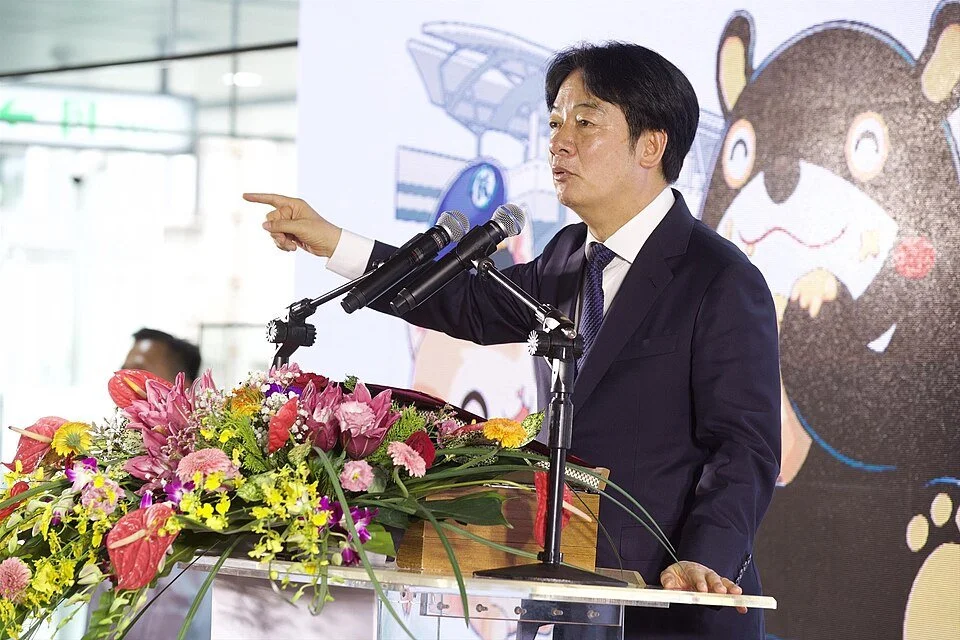
President Lai Ching-te speaking at the opening of the Ganshan Station, 2024
All of this weighs heavily on Xi as he approaches his summit with President Trump. Though the US maintains “strategic ambiguity” on the Taiwan question, maintaining a One-China policy that does not recognize Taiwan as independent, Taipei has become America’s unwritten proxy in its escalating great power competition with China. The US has long bolstered Taiwan’s defense capabilities, authorizing $39 billion in arms transfers through the FMS program between 2015 to 2025. The CCP staunchly opposes these efforts, conducting a “large-scale exercise around Taiwan” in response to Trump’s 2025 approval of an $11 billion arms package to Taiwan.
President Xi will press President Trump on Taiwan during their meeting. He has tremendous leverage to make progress with Trump on this issue. The US is in no position to militarily defend Taiwan when it is preoccupied in the Middle East. America is also desperate to end the war and its strain on the global economy, with Trump increasingly frustrated with Iran’s intransigence. After all, Iran is in a stronger position due to their control of the Strait of Hormuz, having no strategic incentive to make great concessions.
Xi has influence over Iran, so he can give Trump something he desperately wants and needs. For instance, Iranian officials reported that China pressured Iran into accepting the ceasefire in April. China could take similar action and encourage Iran to be more flexible (though China’s help will not secure American victory; it may just move the needle in a positive direction). Time is also of the essence here, putting additional pressure on Trump to concede more than he otherwise might.
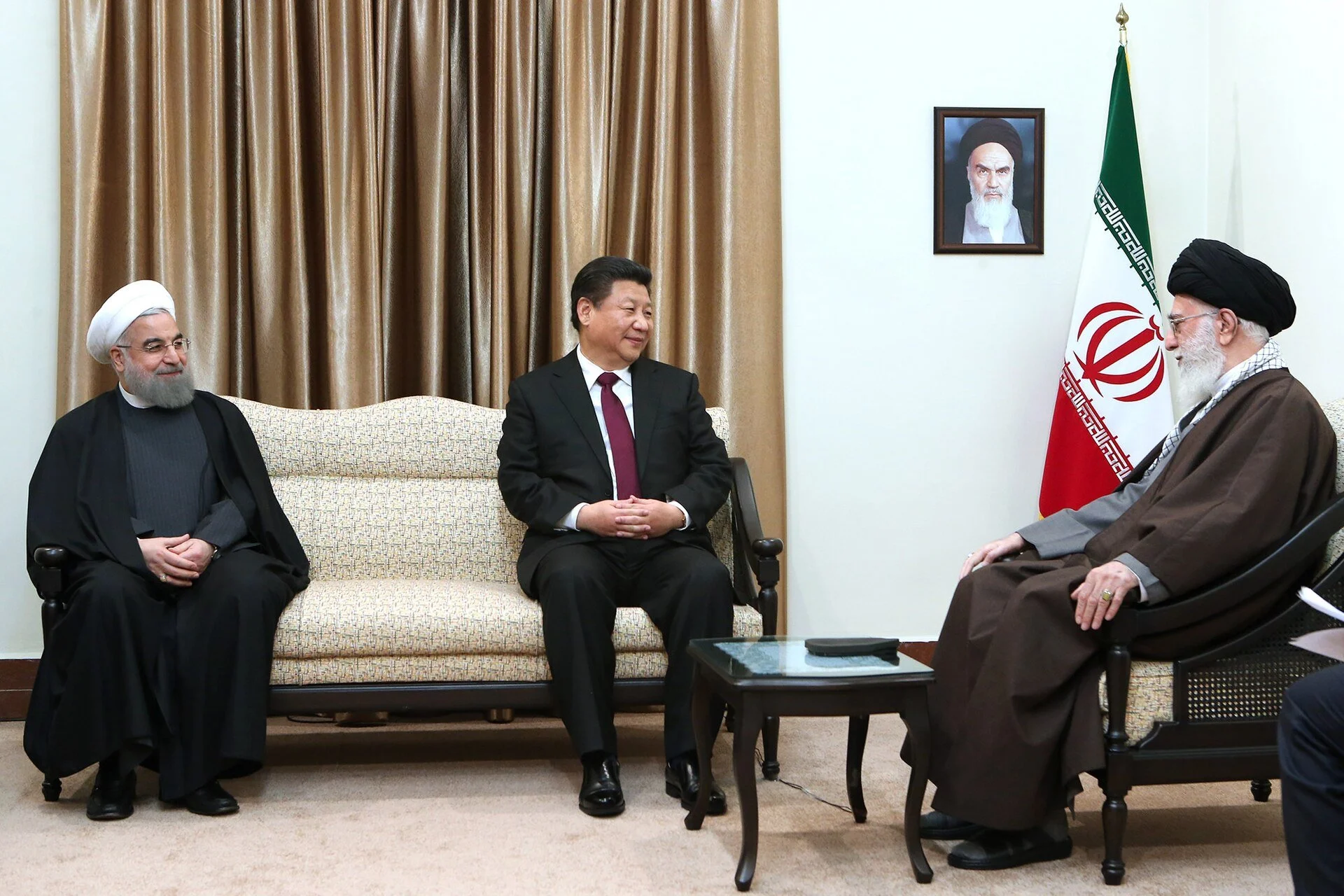
Xi Jinping meeting with Ayatollah Ali Khamenei in January 2016
One issue that Xi will likely bring up at the summit is US military cooperation with Taiwan. These include arms sales, strategic support, and joint military exercises. Though the US has authorized its largest-ever $11 billion arms package for Taiwan, it has yet to process it. Xi could encourage Trump to delay this package indefinitely.
Another lever that Xi may pull with Trump is US support for the KMT and its China friendly chairwoman. The US has more ideological affinity with the staunchly anti-PRC DPP; Congress explains that “some in the KMT express criticism of the United States,” while “the DPP views the PRC as an existential threat and has prioritized cooperation with the United States.” If the US affords the KMT greater approval, especially in a moment when it is aligning itself closer to Beijing, China will have scored a massive victory. KMT chairwoman Cheng Li-Wun is planning a trip to the US and is seeking a meeting with Trump. Xi may request that the American president grant her this meeting.
Beyond his desperation with Iran, Trump is uniquely likely to grant Xi concessions on Taiwan given the administration’s record of aloofness with Taipei. The Trump administration has treated the nationalist Taiwanese president Lai Ching-te with coolness, failing to process the $11 billion arms package, ignoring meeting requests, and rejecting Lai’s request to stopover in the US in order to appease Beijing. At the same time, de facto US ambassador to Taiwan Raymond Greene met KMT chairwoman Cheng Li-Wun at her headquarters and invited her to DC. The Trump administration prefers transactionalism to ideology, creating a unique opening for Chinese diplomatic progress on the Taiwan issue.
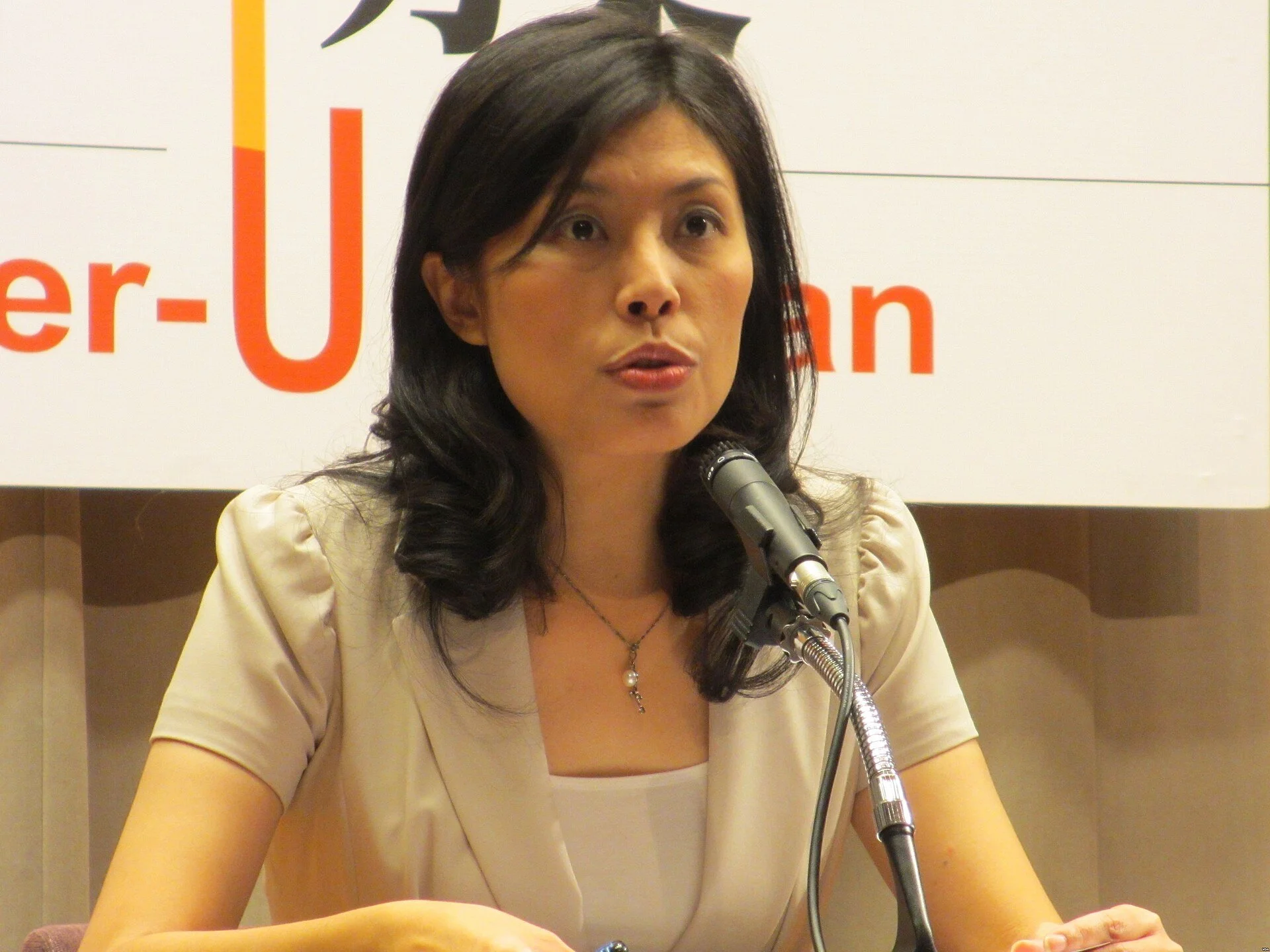
Opposition leader Cheng Li-Wun in November 2012
Any US concession to China on Taiwan will bolster the KMT and cripple the DPP. The nationalist, pro-independence politics of the DPP is only persuasive when confidence in US support is high. The DPP antagonizes China, and that heightens Taiwan’s security risks, especially if it is doubtful that the US would come swooping down to protect Taiwan in the case of a Chinese escalation. Therefore, in the event that the US stalls defense cooperation with Taiwan or improves relations with the KMT, Taiwanese people are likely to support the KMT over the DPP. In such an event, China will have scored an important victory in the Taiwan dispute without firing a single bullet.
90% of the world’s advanced semiconductors come from Taiwan. We use this technology for everything from smartphones to national defense, making the island in East Asia one of the most strategically significant locations on the planet. Chinese victory there may spell American defeat everywhere.
All images sourced from Wikimedia Commons under Creative Commons 4.0 License
