

Who Will Be The U.N.’s Next Leader?
The UN’s flag flying at the United Nations Plaza in the Civic Center, San Francisco
Later this year, the United Nations will elect its next Secretary-General to succeed António Guterres. The U.N. Secretary-General (UNSG) is the chief administrative officer of the United Nations and the world’s leading diplomat. In essence, they oversee the operations of the world’s largest and most important international organization. The UNSG draws their power by convening the U.N. security council, conducting behind-the-scenes diplomacy, and using their moral authority as an impartial moderator. While the general public under-appreciates the role of the UNSG, the selection of the next Secretary-General will undoubtedly shape global priorities, peacekeeping, and humanitarian aid operations. Above all else, the UNSG has the special obligation to ensure the U.N. is capable of saving succeeding generations from the scourge of war, defending human rights, and delivering on Sustainable Development Goals.
This UNSG will inherit a fractured international order. Today, there are more than 60 active conflicts, the highest since 1946, and over 240,000 people have been killed due to conflict-related violence last year. Military spending and nuclear arsenals continue to climb while arms control treaties are expiring or losing credibility. The world trade system is seeing the "worst disruptions in the past 80 years” amid worsening wealth inequality both within and across nations. Global disruptions like artificial intelligence, climate change, and democratic backsliding compound these challenges. At the same time, the U.N. must tackle its legitimacy crisis, gridlock among great powers, repeated violations of human rights, disregard for international law, and an “imminent financial collapse” of the organization as a result of non-payment of membership dues. With the U.N. potentially facing extinction, the actions (or inactions) of the next UNSG could quite literally determine the fate of the world.
There are currently four candidates running for the high office, each of whom have recognized several of the crises the U.N. faces and acknowledge the need for reform. Below are brief bios of each of the candidates and a summary of their vision statement about what they hope to achieve as the tenth UNSG.
Michelle Bachelet
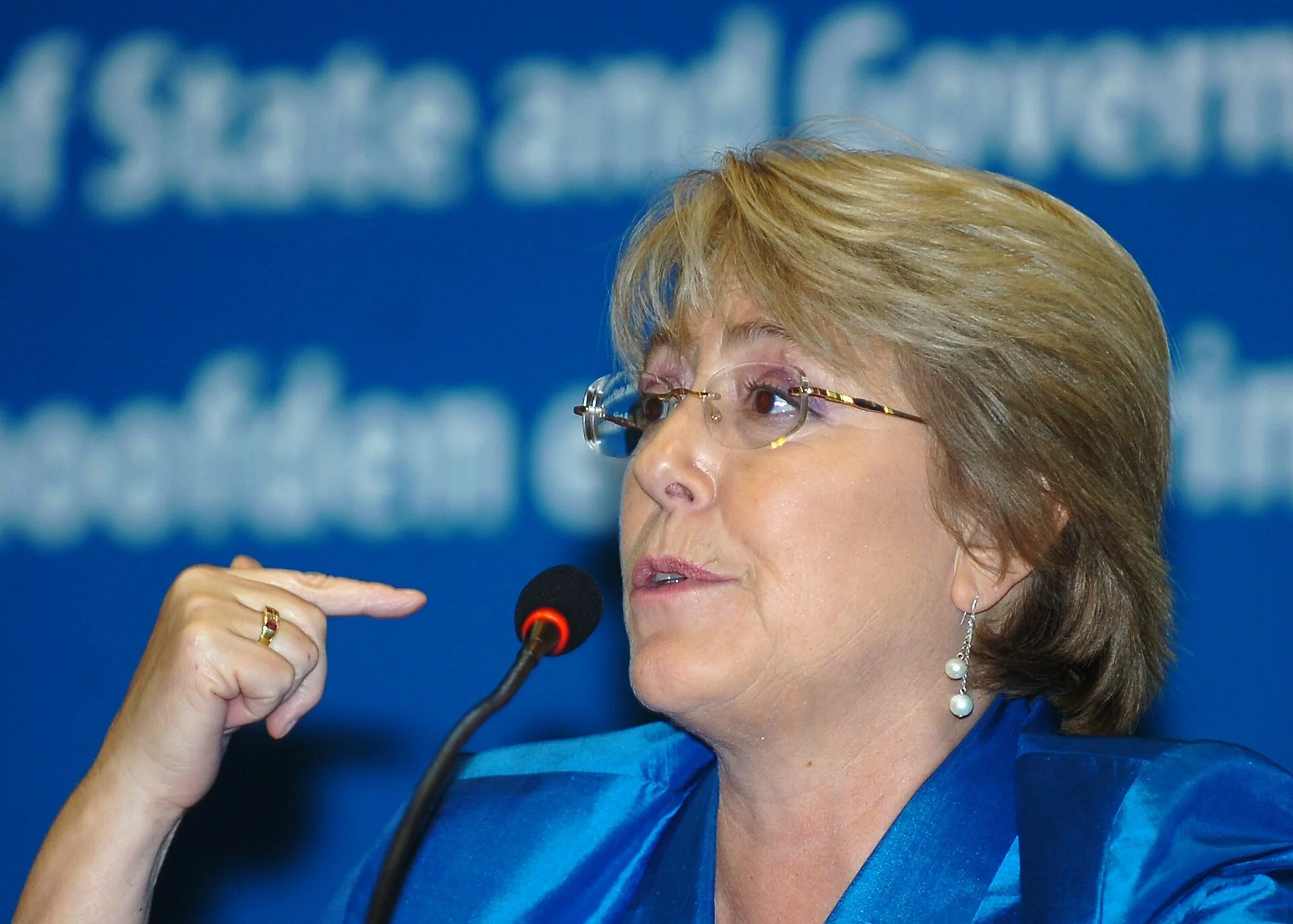
Michelle Bachelet during a meeting of the Union of South American Nations (UNASUR) in 2008
Dr. Michelle Bachelet formerly served as the President of Chile (2006-2010; 2014-2018) and was the first woman to have served in that role. Previously, she was Chile’s Minister of Health (2000-2002) and Minister of National Defense (2002-2004) under Socialist President Ricardo Lagos. Dr. Bachelet has also served as the first Executive Director of U.N. Women (2010-2013) and the seventh United Nations High Commissioner for Human Rights (2018-2022). As a center-left politician, she has been nominated by the left-wing governments in Brazil and Mexico (Chile recently rescinded their nomination of Bachelet after a right-wing administration took power).
With her extensive executive background and her ability to break glass ceilings for women, Dr. Bachelet is running a campaign for the UNSG emphasizing her experience both in positions of power and as a citizen who was tortured and forced into exile under Chilean dictator Augusto Pinochet. In her vision statement, Bachelet seeks to “build the United Nations the world needs” by calling the world to look inward, outward, backward, and forward. In her own words, the UN should look inward by modernizing its bureaucracy, preventing conflicts early, and acting impartially to all parties; it should look outwards by regaining global legitimacy through clear communication and real results. She stresses that, by looking backward, the historical victories of the U.N. can help us look forward to the possibilities of cooperation and multilateralism. Bachelet's vision calls for a renewal of the UN's three foundational pillars — peace and security, sustainable development, and human rights.
Rafael Grossi
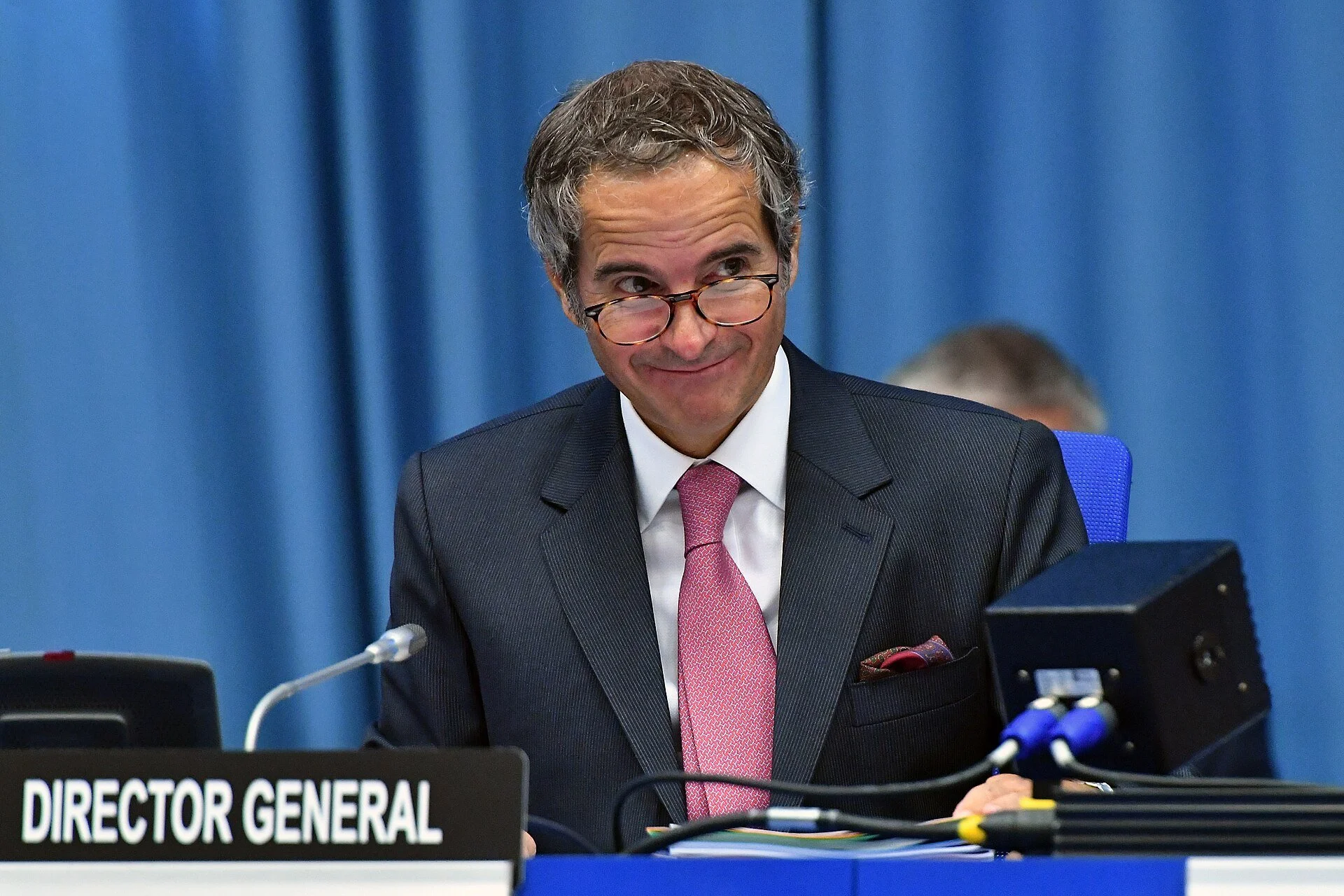
Rafael Grossi at the 555th Board of Governors meeting at the IAEA headquarters in Vienna, Austria, 2020
Rafael Grossi is the current Director General of the International Atomic Energy Agency (IAEA). He is the former Argentine Ambassador to Austria (2013-2019) and he has been nominated by Argentina, under President Javier Milei, to run for UNSG.
Mr. Grossi’s vision statement focuses on several priorities. For instance, Grossi wants to see the U.N. return to its founding promise of saving humanity from war. He has said repeatedly that the U.N. has been notably absent in many recent conflicts. He advocates for an “active” UNSG, one that maintains continued engagement and dialogue among member states to manage conflicts. In his campaign, Grossi has touted his success in negotiations with Ukraine and Russia to prevent a nuclear accident at the Zaporizhzhia Nuclear Power Plant. Grossi has criticized rhetoric from the U.N. for being inflammatory and argues that the organization often alienates key parties that are necessary for decision making. Instead, Grossi believes that it is important to talk to everyone, including aggressors, if it is for the sake of pursuing peace. He hopes the U.N. will remain firm on human rights and advocates for reform of the U.N.’s bureaucracy to meet the needs of humanity. Grossi calls himself a realist and hopes to use his power as UNSG to promote multilateralism in an increasingly distrustful world.
Rebeca Grynspan
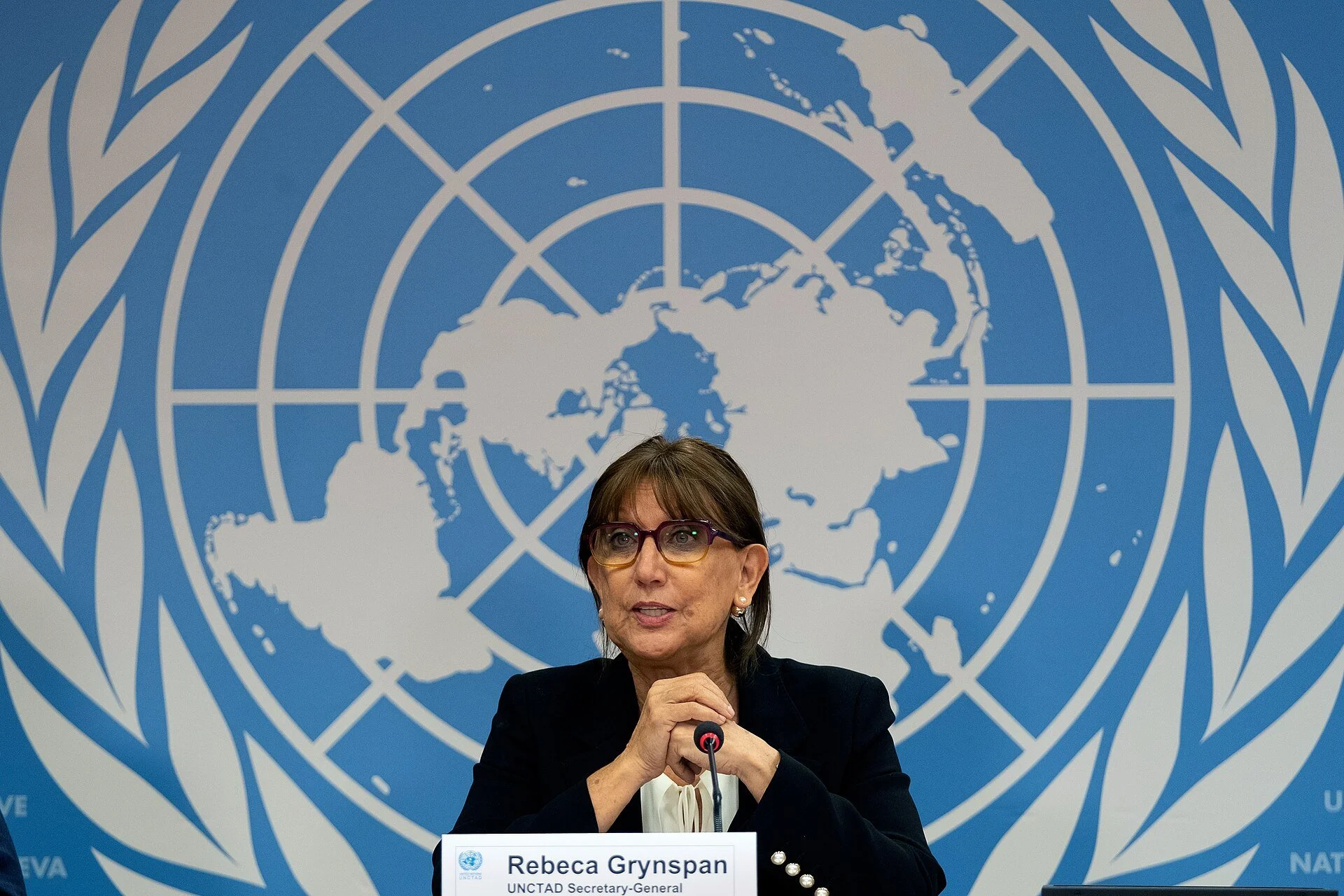
Rebeca Grynspan at a press conference for the Trade and Development Report in 2021
Rebeca Grynspan was the Vice President of Costa Rica (1994-1998) under the center-left National Liberation President José María Figueres. Grynspan has also served since 2021 as the Secretary-General of the U.N. Conference on Trade and Development (UNCTAD) and recently took a special leave of absence from the role to eliminate conflicts of interests in her candidacy for UNSG. She is the only candidate thus far to have withdrawn from their current post. She has been nominated by Costa Rica.
Ms. Grynspan has emphasized the expanded roles of regional organizations, the private sector, and civil society organizations in their capacity to act in the absence of the U.N. She has also been a staunch advocate for taking risks and not fearing rejection when negotiating. To prove she has the necessary experience, Grynspan has highlighted her role in brokering the Black Sea Grain Initiative which resumed grain exports through the Black Sea during the Russia-Ukraine war, lowering global grain prices by 23%. If elected Secretary-General, Grynspan believes that we must “chart a path of renewal, to make the U.N. more useful, more agile and more accountable to the governments and people it serves.”
Macky Sall
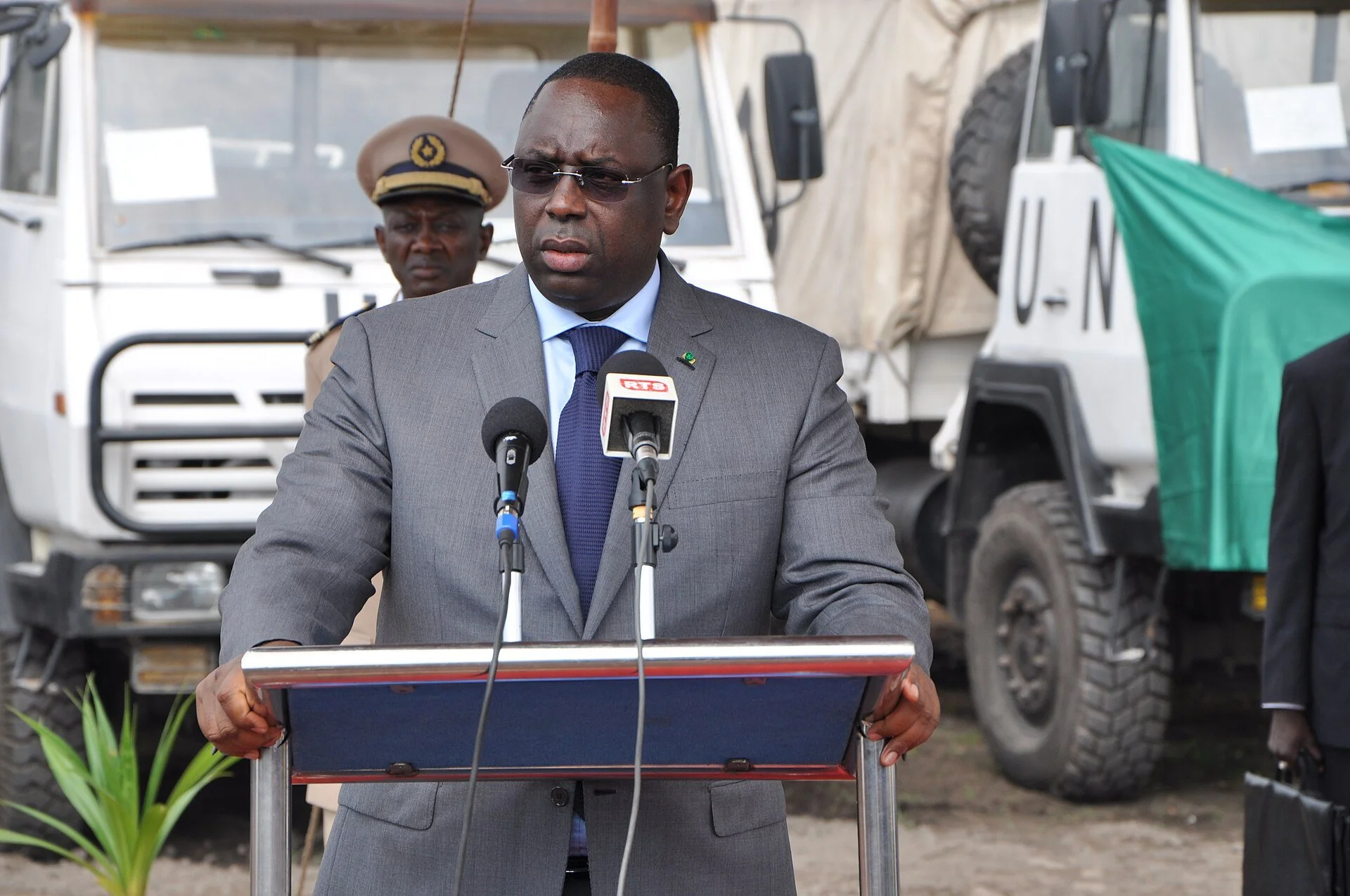
Macky Sall speaking in Kinshasa, DRC, 2012
Macky Sall is the former President of Senegal (2014-2024) and former Chairperson of the African Union (2022-2023). The end of his presidency was marked with controversy as he had unconstitutionally ordered the indefinite postponement of elections until a court blocked the order. While Senegal has refused to endorse him, the government of Burundi nominated Macky Sall for UNSG.
Mr. Sall maintains that the U.N. must be reformed, streamlined, and modernized in order to rebuild confidence in the ability of multilateralism to meet today’s global challenges. Sall draws on his experiences in many areas of governance and emphasizes the need for responsibility when using U.N. resources. His understanding is that the U.N. needs a leader that is pragmatic and can offer tangible results that world governments can look at to justify the existence of the U.N.
Next Steps
The candidates for the next U.N. Secretary-General will undergo a rigorous election process. The winning candidate will need at least 9 votes from the U.N. Security Council and avoid vetoes from the permanent members. They will then need a majority vote from the General Assembly to be appointed. Based on previous UNSG elections, it is likely that the selection process will end between August and October of this year. In future articles, I will explain what qualifications each of the great powers seek from the next UNSG and dive deeper into each candidate’s backgrounds.
All images sourced from Wikimedia Commons under Creative Commons 4.0 License