

Israel’s Last Hand With Washington

Israeli F-15I Ra’am strike fighter jets en route to Iran in June 2025
Israel is hemorrhaging support from the United States, its principal financial and military backer. The Israelis understand how desperate the situation is: foreign minister Gideon Sa’ar called Israel’s international image an “existential issue,” comparing investments in PR to “investing in jets, bombs, and missile interceptors.” Israel must win back American support to protect its strategic future in the region. This is why Israeli lawmakers recently voted to quintuple the country’s public diplomacy budget. However, winning back public support at this point implies abandoning the war effort in Iran, which in itself spells political and strategic catastrophe for Israel.
With the international community demanding peace when Iran and its proxies seem to have the upper hand, the Israeli government is caught between a rock and a hard place. If it pursues an off-ramp from conflict in the hopes of shoring up international support, it risks long-term strategic vulnerability and domestic backlash. If it continues to beat the war drum in an attempt to turn the tides against Iran, it risks alienating the American public irretrievably, with no guarantee of even short-term victory. So what is Bibi’s next move?
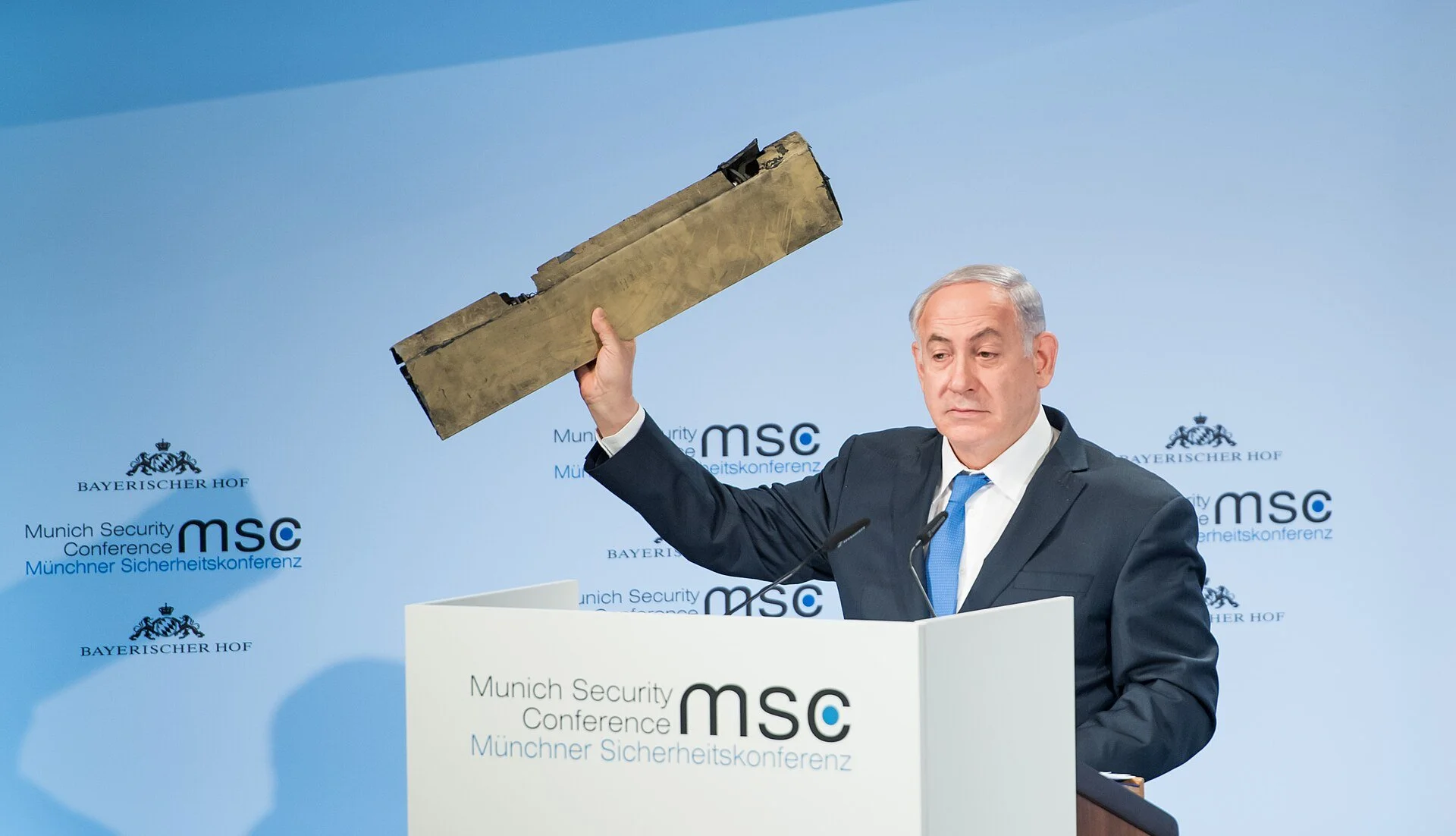
Benjamin Netanyahu holding a piece of an Iranian drone at the Munich Security Conference in February 2018
One option is to comply with US efforts to negotiate out of this war and regroup international support to fight another day. While there’s no certainty that the US won’t strike Iran again or that the Iranians themselves want peace, Secretary of State Marco Rubio announced that the military operation Epic Fury is over, and President Trump posted that he would pause efforts to guide ships through the Strait of Hormuz in order to finalize a deal with Iran. Israel could help achieve that deal in earnest, which could give them time to regroup and reformulate their strategy while also building goodwill with President Trump and the international community writ large. The trouble is spinning the conflict as a victory with the public at home.
Netanyahu can still claim that the war was a success by pointing to the destruction of Iran’s conventional forces and the death of much of its leadership. It is unlikely that this argument will find success, however, as the number of Israelis that believe the Iranian regime will fall or suffer serious damage as a result of the war has fallen by a staggering 25%.
Clearly, the political argument to back down now is shaky at best. INSS polling found that 61% of Israelis oppose the ceasefire with Iran and 73% believe their country will have to renew hostilities this year. The same is true with regard to Lebanon—69% of Israelis support continuing the fight against Hezbollah. Indeed, Israelis are very unsatisfied with how the war has gone. Only 37% are satisfied with military achievements and an even lower 23% are satisfied with political achievements.

2020 protests against Netanyahu in Jerusalem
If backing down isn’t an option, Bibi can pursue escalation.
First, any conceivable peace deal at this point would position Israel negatively on the strategic chessboard. Israel’s goal has been to utterly destroy the Iranian regime, which it considers an existential threat. That certainly hasn’t happened; to the contrary, the evidence suggests that the Iranians are more hardline than before the war, and confident to boot—some analysts predict that an Iranian tollbooth in the Strait of Hormuz is here to stay, which could permanently tilt the regional balance of power in Iran’s favor. Furthermore, Israeli officials believe that the Iranians still possess over 1,000 ballistic missiles that can reach Israel. It’s no wonder that Israeli security sources report that the IDF “unanimously opposes a US agreement with Iran,” considering it a “disaster for Israel.”
Second, Netanyahu is surrounded by a far right administration that is hardline on Iran. His government has long been described as the “most religious and hardline government in Israel’s history.” The most extremist figures like Itamar Ben-Gvir and Bezalel Smotrich (the former having been convicted of racism and supporting terrorism) hold tremendous influence over Netanyahu, “controlling 20 seats” in his coalition (though these figures are in flux ahead of October elections). Netanyahu has an incentive to placate his coalition allies—his bloc is only at around 50 strong while the opposition has ~60, just shy of the 61 needed to form a majority government. While Netanyahu has been able to resist hardline pressure in the past, he may not have this luxury now: current election odds show the hawkish opposition surging in reaction to the fledgling war effort. With the ceasefire badly hurting Netanyahu in the polls, hardline allies would have little difficulty persuading him that resuming hostilities would improve his Likud party’s chances.
Third, and perhaps most importantly, Netanyahu’s legacy is on the line. Not only are Israelis disillusioned with the war effort, they are also immensely dissatisfied with Netanyahu himself—67% of Israelis distrust him and only 32% report high trust, a 6% decline from his already measly approval rating of 38% before the war. With low approval ratings, political controversy, and a losing war on his hands, the 76 year old Netanyahu does not have much time to rehabilitate his image. Success in the Iran war may be his last chance to leave behind a positive legacy, especially since he publicly stated that he has “yearned” to fight Iran “for 40 years.” At least for now, Israel has an ally in the Trump administration and 74% of Americans still believe that it is in the US’s interests to prevent the emergence of a nuclear Iran. However, this support is only guaranteed in the short term, with American young people across the aisle turning their back on Israel. On a national level, this may be Israel’s last opportunity to launch a war against Iran with direct American support. On a personal level, it may be Benjamin Netanyahu’s last chance to fulfill a lifelong dream and leave his office in triumph.
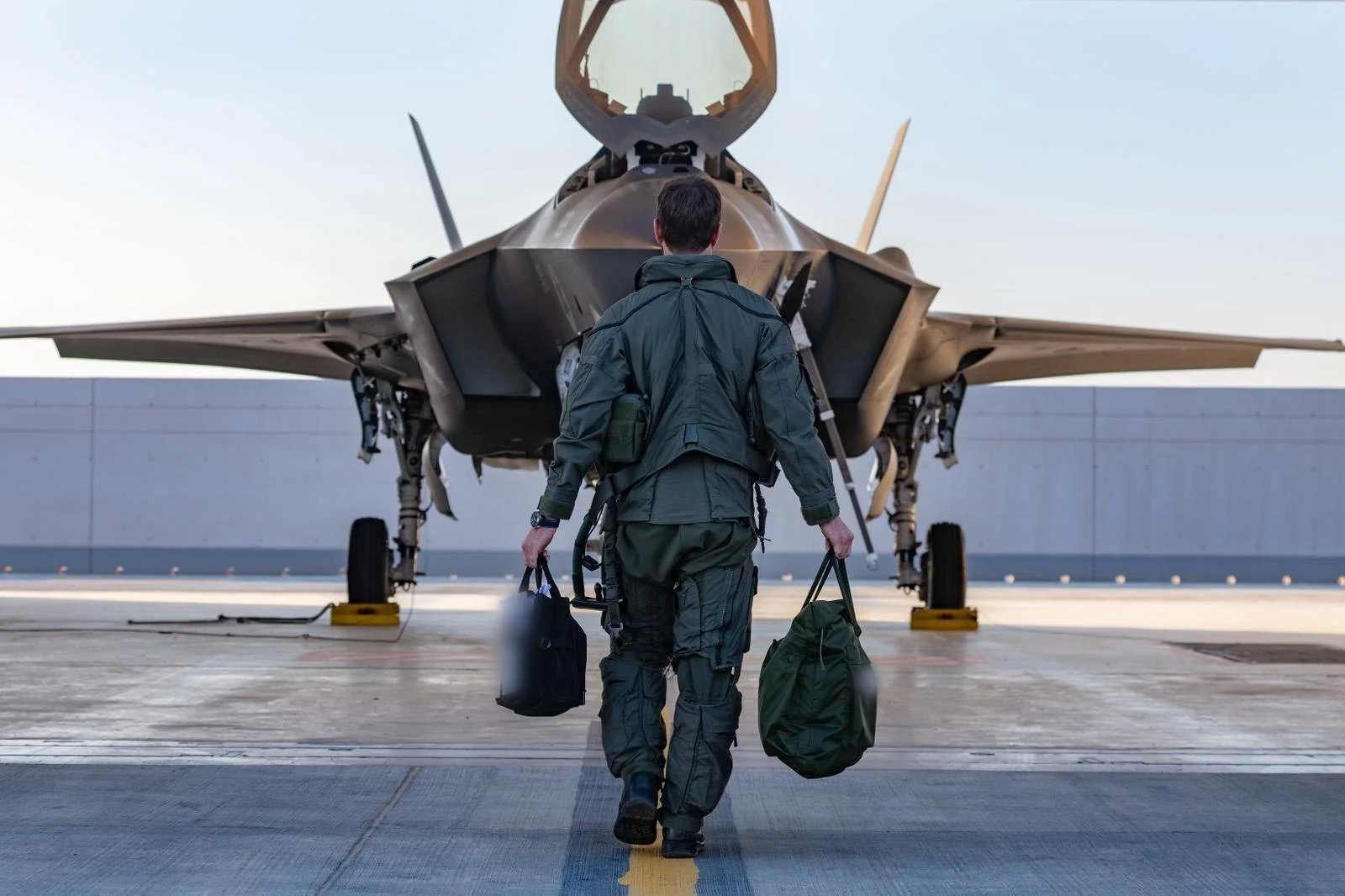
An Israeli pilot preparing to board an F-35I fighter jet during Operation Roaring Lions, March 2026
It is therefore very clear that Israel hopes to prolong the war; the crucial question is whether they have the capability to achieve this objective. Any Israeli escalation strategy demands US cooperation. Thus, Netanyahu must convince President Trump that resuming military strikes against Iran is prerequisite to durable peace. Perhaps he can point to reports that Iranian civilian negotiators have no real power, meaning negotiations are doomed for failure. Perhaps he will argue that Iran is too intransigent to make concessions, so additional strikes are necessary to break Iranian resolve. He can point to recent escalations, like Iran’s first attack against the UAE since the ceasefire, as evidence. Whatever the strategy may be, Netanyahu needs Trump on his side. He has never pursued strikes against Iran without American approval and cooperation, and if he humiliates Trump by breaking the ceasefire with unilateral attacks, he may damage his relationship with the American president beyond repair.
Cameron Dokey wrote that “a cornered animal is almost as dangerous as a wounded one.” In that spirit, Benjamin Netanyahu and his government are doubly dangerous. Actors on the verge of inescapable defeat are given to desperate gambits for victory; with Netanyahu’s window of American support rapidly closing, he may pursue a final attempt at radical escalation before he loses the chance for good. To that end, the Israeli government’s quiet acceptance of ceasefires in Iran and Lebanon could signal a calm before the storm, rather than genuine openness toward peace. While global attention is fixed on the American-Iranian standoff in Hormuz, this is perhaps the most important moment to watch closely for Netanyahu’s next move.
All images sourced from Wikimedia Commons under Creative Commons 4.0 License
