

Explaining Israel’s America Problem

A pro-Israel rally in Los Angeles during a 2014 Israeli military operation against Hamas
Israel has an America problem.
Though the United States has long been Israel's primary ally and benefactor, recent polling indicates that a growing number of Americans disapprove of the relationship. Israel’s America problem will fester over time, as disillusionment with Israel is most pronounced among young Americans. This presents a critical strategic vulnerability for Israel that may fundamentally alter the geopolitics of the Middle East.
The US-Israeli relationship is longstanding and historically unprecedented. The US government has supported the Israeli state since its inception, increasing aid after the 1967 and 1973 Arab-Israeli wars. Having received over $300 billion, Israel is the largest historical recipient of US foreign aid, with most of this aid supporting the Israeli military.

Israeli Prime Minister David Ben-Gurion (right) and Israeli Ambassador to the US Abba Eban (center-right) visit President Harry Truman (left) in the White House
There are several explanatory factors underlying the US’s incredible historical support for the state of Israel. During the Cold War, Israel was a strategic asset that countered Soviet influence in the Middle East. Israel has also been considered an invaluable regional ally in the War on Terror, regularly dubbed the “only democracy in the Middle East” by American policymakers.
Pro-Israel lobbyists (most notably AIPAC) have championed the argument that military aid to Israel advances the American national interest. Much like any other lobby, AIPAC endeavors to influence Washington by rewarding its supporters and punishing its opponents—and it has been exceptionally good at its job. In the 2024 election cycle, AIPAC supported 361 candidates across the aisle and directly contributed $53 million. In the words of former Israeli Prime Minister Ariel Sharon, “when people ask me how they can help Israel, I tell them — help AIPAC.”
The success of pro-Israel lobbying speaks for itself: not only does Israel receive unparalleled support from the US in raw quantity, it also enjoys special privileges not afforded to other American allies. While other countries have to spend American military aid on American defense firms, Israel is allowed to spend a sizable portion of American aid on domestic Israeli firms. Where other countries receive aid in quarterly installments, Israel receives a lump sum of aid at the start of the fiscal year, allowing it to accrue interest by lending out some of this money. Though the Leahy law forbids the US from providing military support to countries committing human rights violations, Israel has used American military aid to commit war crimes in Gaza with impunity, under both a Democratic and Republican president. The US even has a legally binding obligation to ensure that Israel’s military is more powerful than its neighbors, dubbed the “Qualitative Military Edge.” American policymakers across the aisle have placed a premium on protecting the state of Israel, with some US states going as far as to legally punish Americans that attempt to boycott Israel.
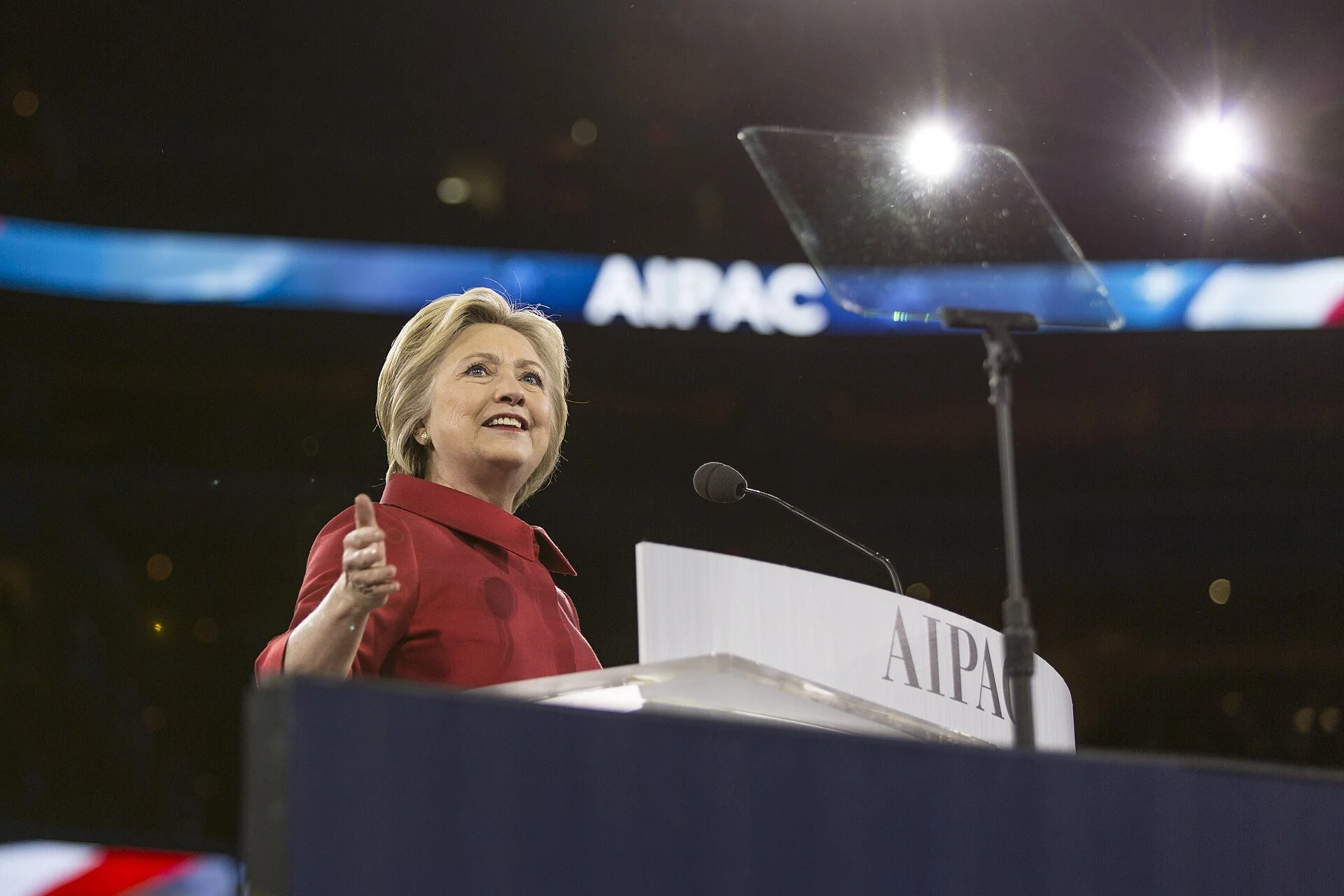
Hillary Clinton speaking at the AIPAC Policy Conference in Washington DC, 2016
Tremendous US military support has become a vital arm of Israel’s foreign policy strategy. Even before the US increased support following the October 7th attack, American aid constituted 20% of Israel’s defense budget. Israel has also demonstrated that it will not pursue certain military adventures without US support; though Prime Minister Netanyahu has championed a war against Iran for four decades, he did not initiate hostilities until he secured direct American participation.
Unfortunately for Israel, its alliance with the US is faltering, with polls signalling a precipitous fall in American support for the Jewish state. American political currents have been shifting against Israel for years now, escalating since Israel’s campaign against Gazans in October 2023. A Gallup poll asked Americans if their sympathies lie more with the Israelis or the Palestinians; in 2013, 12% answered “Palestine” and 64% answered “Israel.” In 2026, 41% answered “Palestine” while only 36% answered “Israel.” The Iran war has only accelerated this trend, with a Pew Research poll in late March finding that 60% of American adults hold an unfavorable view of Israel, a 7% increase from the preceding year.
This is not to say that Israel would be defenseless without the US—it won two wars without American aid and remains the only nuclear power in the Middle East. However, the prospect of dwindling US support represents a major strategic liability for Israel, jeopardizing a significant portion of its defense budget, broader Western support, and subsequently, the viability of further territorial expansion through warfare.

Pro-Palestine student protest in 2023
The decline in support for Israel is not unipartisan. While Democrats rate Israel far worse than Republicans, younger Republicans are also breaking with the old guard, with 51% of Republican voters under 45 desiring a 2028 presidential candidate that would reduce military aid to Israel. Horrific footage of atrocities in Gaza and the rise of anti-Israel alternative media have driven this shift, and will continue to do so. The fact that anti-Israel sentiments are most concentrated among American youth—a recent poll found that 74% of Gen Z Americans sympathize with Palestinians over Israelis—supports this argument. In yesterday’s America, it was political suicide to criticize US support for the state of Israel. In tomorrow’s America, it may be political suicide to endorse US support for Israel’s wars in the Middle East.
At a critical juncture in its history, the Israeli government is staring down the barrel of a strategic catastrophe: the looming end of its “special relationship” with the US. There is no telling how quickly US support for Israel will sink and to what extent. Old habits die hard, and there are bona fide ideologues in the US government that will continue fighting tooth and nail for a pro-Israel foreign policy (Ted Cruz’s infamous assertion that he “came into Congress with the stated intention of being the leading defender of Israel in the US Senate” comes to mind.) Pro-Israel lobbyists will also persist in their efforts, and their money and influence in Washington talks. Nevertheless, the dramatic shift against Israel among political pundits, certain elected officials, and the American body politic, will surely have a profound impact on the US’s blank check of support for Israel.
Given the stark prognosis for the American-Israeli relationship, Israel must formulate a response to protect its grand strategic goals. The Israeli government will not let its American “trump card” go quietly into the night, especially during a war that is quickly becoming a political and strategic failure. Standing at a pivotal crossroads, Prime Minister Netanyahu has two options: accept defeat now and attempt to win America back in the long term, or extract all that he can from his alliance with the US while it remains a guarantee, striking a grand bargain to snatch victory from the claws of defeat. In my next article, I will analyze both of these choices in more depth.
All images sourced from Wikimedia Commons under Creative Commons 4.0 License
