

Cryptocurrency Crippled the American Sanctions Regime. Trump Delivered the Final Blow
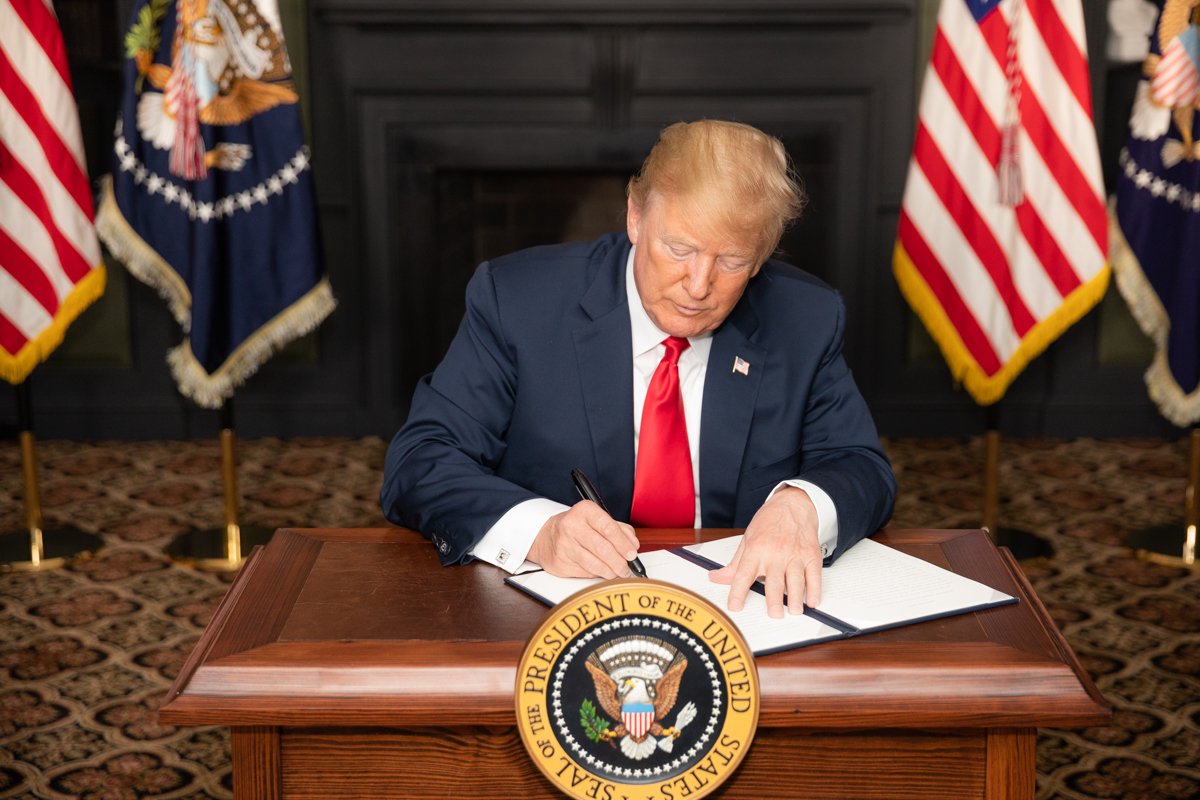
President Donald J. Trump signs an executive order on Iran sanctions, August 2018
As Americans debate whether the U.S. should remove sanctions to end the war, President Trump has effectively been providing Iran sanctions relief for over a year. Though Trump declared a maximum pressure campaign against Iran's economy, his cryptocurrency policy has rendered America's sanctions regime largely ineffective.
Sanctioned entities illicitly received $104 billion in cryptocurrencies in 2025, a 694% increase from the previous year. Since sanctions make the movement of fiat currency difficult, Russia, North Korea and Iran have turned cryptocurrency into a core financing strategy. In 2025, North Korea stole $2 billion in cryptocurrency; Russia processed $93 billion through its A7A5 stablecoin; and the Islamic Revolutionary Guard Corps (IRGC) received at least $3 billion through crypto exchanges. President Trump’s partnership with the cryptocurrency industry has exacerbated the issue, crippling America’s ability to enforce sanctions and undermining the war effort as a result.

President Trump delivers remarks at a crypto conference at Mar-a-Lago, April 2025
The very nature of cryptocurrency facilitates sanctions evasion. Sanctions target specific actors, ranging from individuals to nations, by subverting those actors’ economic activities. Cryptocurrency can undermine the efficacy of sanctions through anonymity and decentralization.
First, cryptocurrency can afford users a high level of anonymity, making it difficult to identify the actors making and receiving transactions. Crypto transfers are linked to encrypted aliases stored on distributed ledgers called “blockchains,” which authorities can use to identify the individuals making transactions. Blockchains can be susceptible to cyberattacks, meaning hackers can modify crypto transaction details before they are validated or manipulate programs on the blockchain in an effort to steal funds. These tactics allow entities to evade sanctions and generate income by masking their identity and exploiting the blockchain.
Second, the architecture of cryptocurrency is decentralized, reducing reliance on the traditional financial infrastructure that is leveraged to enforce sanctions. In lieu of a central authority, cryptocurrency transactions are verified by a decentralized network of computers, making them a hotspot for illicit activity. However, cryptocurrency itself is not widely usable, so users still need to go through cryptocurrency exchanges to convert their funds into fiat currency. The international community can and has compelled these exchanges to monitor transactions and crack down on illicit activity. Nonetheless, these exchanges have historically been used to facilitate millions of dollars of sanctions evasion at a time.
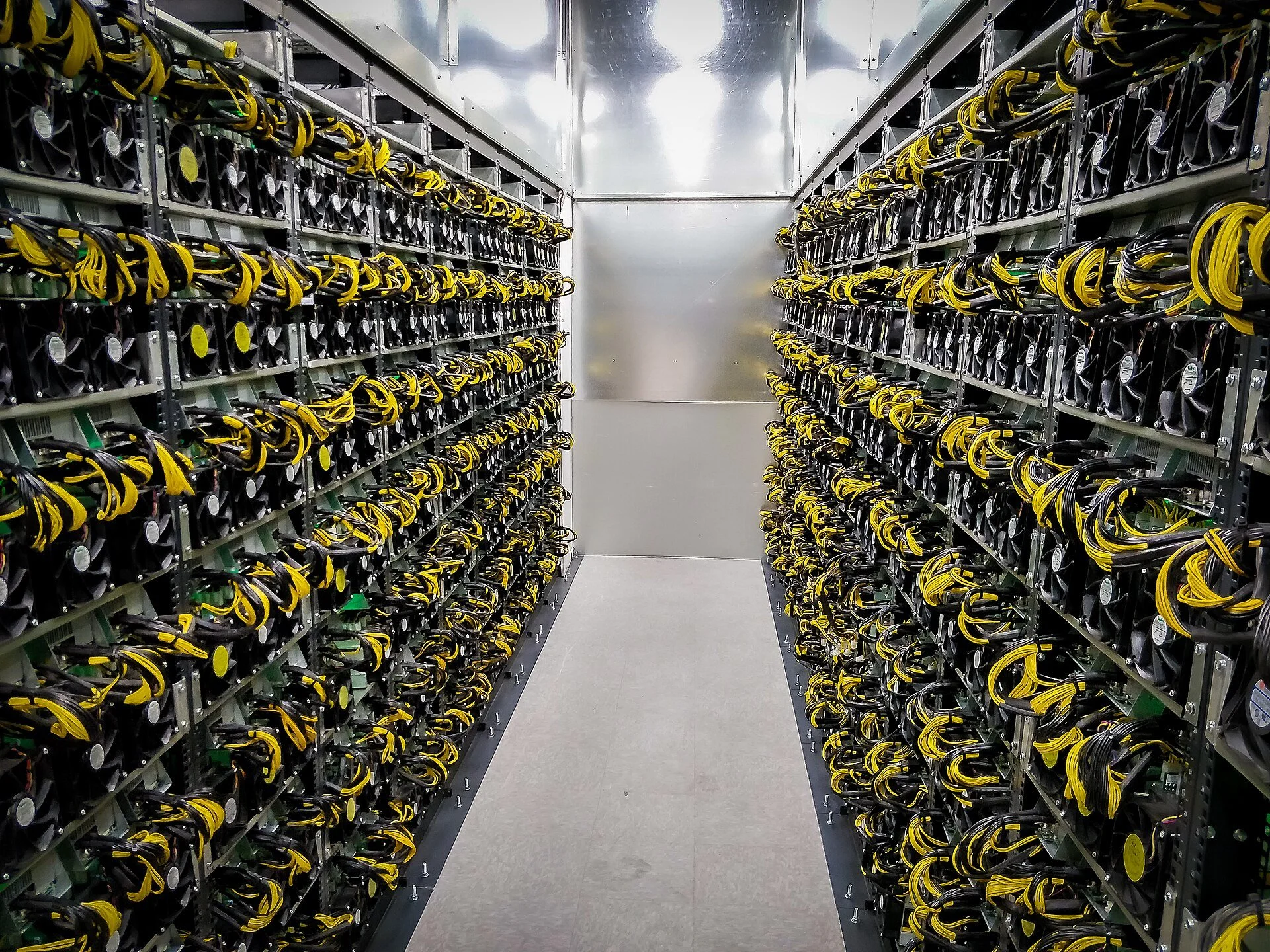
Racks of processors at a Bitcoin mining facility in Mirabel, Quebec, 2018
Iran, in particular, has employed various tactics to evade American sanctions using cryptocurrency. After the JCPOA agreement was discarded in 2018, Iran began institutionalizing its sanctions evasion strategy by legalizing and regulating cryptocurrency mining. Iran mandated miners to sell mined cryptocurrencies back to the country’s central bank. Iran’s largest cryptocurrency exchange is Nobitex, established in 2018 by two brothers hailing from a family that has maintained close ties with the Iranian ruling elite for generations. Nobitex has played a crucial role in sanctions evasion: according to an Elliptic investigation, Iran’s Central Bank acquired half a billion dollars in cryptocurrency, the lion’s share of which was sent to Nobitex. Despite Nobitex’s role in financing the Iranian regime, they avoided U.S. sanctions until this Tuesday.
Though national and international actors like the Office of Foreign Assets Control (OFAC) and the European Union (EU) are attempting to crack down on crypto exchanges enabling sanctions evasion, the Trump administration has seriously undermined these efforts. At a time when crypto crime surged by 162% in a single year, the Trump administration disbanded the National Cryptocurrency Enforcement Team (NCET); gutted 89 cryptocurrency enforcement cases in the span of weeks; slashed the staff of an agency responsible for combatting money laundering and terrorist financing by 11%; and stripped state regulators of the authority they had long used to police illicit crypto activity.
Deputy Attorney General Todd Blanche stated that the Justice Department will “cease cryptocurrency enforcement in order to focus on other priorities.” The DOJ has announced that it will abandon Biden-era efforts to target the cryptocurrency exchanges and virtual currency mixers that are used to enrich America’s adversaries with billions of dollars. This is why the SEC under Trump dismissed its civil enforcement action against Kraken, a major crypto exchange that previously violated Iran sanctions, without penalty.

Deputy Attorney General Todd Blanche holds a press conference with former Attorney General Pam Bondi, June 2025
The crypto lobby donates millions of dollars to support the president and his party, giving $18 million in inauguration donations and spending $131 million on congressional races this cycle. Right before the SEC dropped its lawsuit against Kraken, the crypto exchange had donated $1 million to Trump’s inauguration. Similarly, after Chinese crypto-billionaire Justin Sun bought $75 million of crypto tokens from the Trump family’s company World Liberty Financial, he was awarded a dinner with Trump and fraud investigations against him were dropped. At the cost of sabotaging national security, President Trump has personally made $1.2 billion from crypto ventures since taking office.
A particularly damning example of Trump favoring his cryptocurrency investments over national security is his dealings with Binance, a major crypto exchange that has repeatedly facilitated Iranian sanctions evasion.
After Trump won the 2024 election, Binance heavily lobbied the administration to pardon its founder, Changpeng Zhao, who served four months in prison for money-laundering. Binance also partnered with World Liberty Financial and helped push the Trump-led company’s market cap from $127 million to over $2 billion.
Binance’s efforts paid off: Trump rewarded the company’s founder with a pardon and the SEC dismissed its lawsuit against Binance—the same company that pleaded guilty to money laundering in 2023 after it enabled Iran and Hamas to evade millions of dollars in sanctions. Binance’s complicity in sanctions evasion didn’t stop after 2023 either; in the last two years, billions of dollars in crypto transactions have moved through Binance to the IRGC. Transactions through Binance accounts to the Iranian regime were reported as recently as this May, effectively funding Iran against America.

Binance founder Changpeng Zhao at Web Summit, 2022
Revenues made from cryptocurrencies are vital to the Iranian war chest. In Q4 of 2025, “IRGC-linked addresses” received over $3 billion in cryptocurrencies. The IRGC’s total estimated budget in 2025 was around $6 billion.
The Trump administration has been bombing Iran with one hand and bankrolling them with the other. By prioritizing business interests over grand strategy, the administration has weakened America's leverage on the battlefield and at the table.
All images sourced from Wikimedia Commons under Creative Commons 4.0 License
