

Crying Wolf: How Trump’s Threats Invite Miscalculation in the Gulf

President Trump updates the press on U.S. airmen rescue mission, with War Secretary Pete Hegseth standing to the right, April 6, 2026
After a month-long lull in bombing, the U.S. resumed kinetic operations against Iran on Aug. 30, striking minelaying forces in Larek Island and killing two. The strike triggered another round of escalation: U.S. Central Command announced strikes against air defense and communication targets on Sept. 1, which Iranian authorities claim hit a wedding celebration in the city of Kuhestak, killing five civilians; Iran attacked American military bases in Iraq, Jordan, Kuwait and Bahrain on Sept. 2; Iran targeted sites in Kuwait and the United Arab Emirates (UAE) on Sept. 3.
In trademark fashion, President Trump issued apocalyptic warnings to Iran after America’s Aug. 30 attack. On Sept. 1, Trump posted, “if the failed Nation of Iran retaliates for this very justified attack, they will be hit again at a much harder and higher level, but it will not be the biggest attack of them all, that is waiting in the wings and, when it is over, there will be very little left of the Islamic Republic of Iran!”
The leader of the most powerful country in world history publicly threatened to destroy the nation of Iran. His statement barely provoked a peep from the international news media, and Iran’s decision-making was seemingly unaffected. Trump’s threat was specific and conditional: retaliate, and face harsh consequences. Yet Iran defied the warning and struck American targets across the Gulf for two consecutive nights, and the threat went unenforced. When the U.S. finally responded on Sept. 5, after Iran fired missiles at an American carrier and destroyer, it delivered a calibrated strike targeting three tankers, nowhere near the promise of a “harder and higher” attack. By crying wolf too many times, Trump has systematically weakened his ability to deter Iran by threat of force.
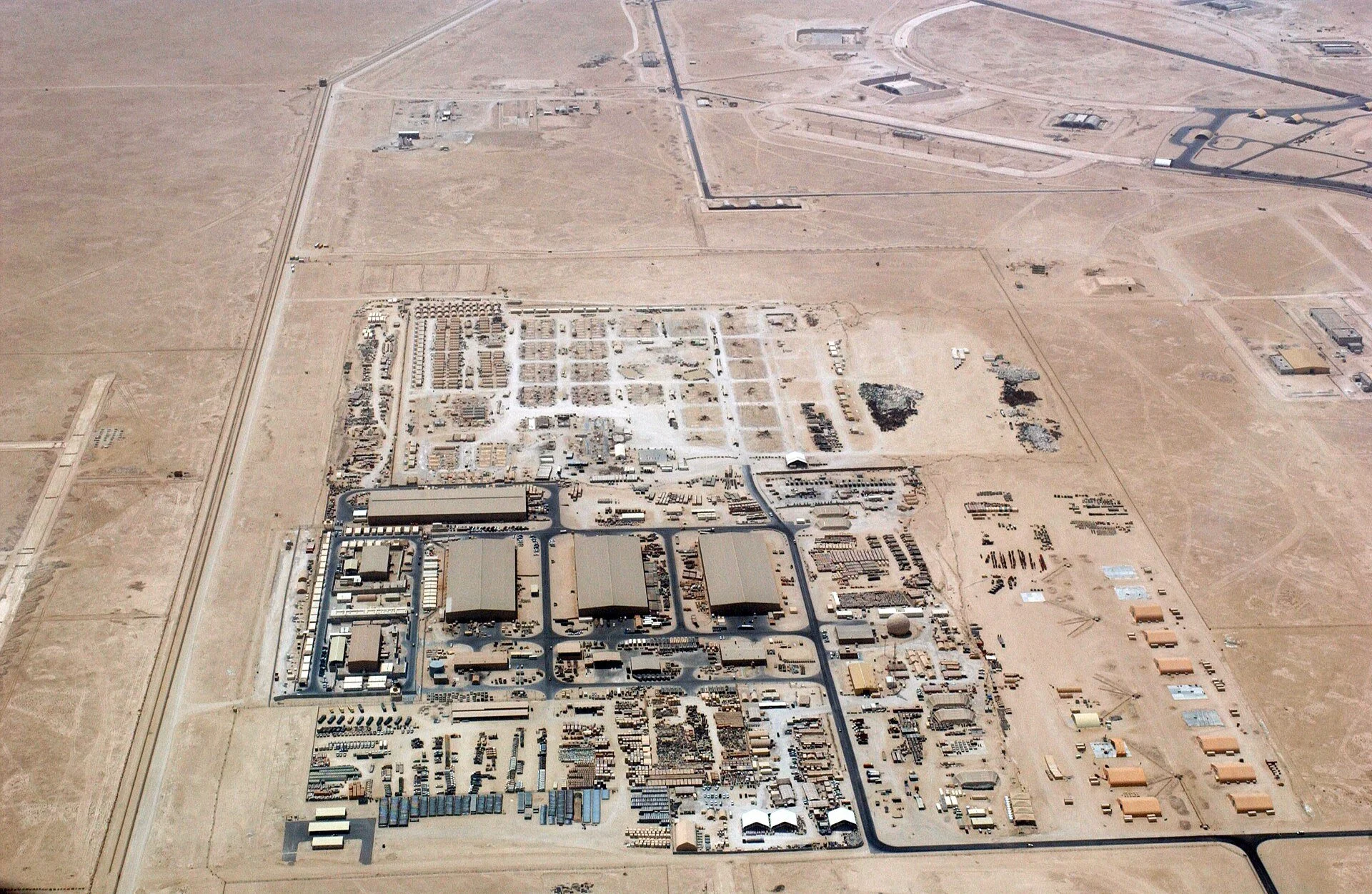
Aerial view of Al Udeid Air Base in Qatar from August 2004, which Iran has targeted with drone and missile attacks
Indeed, Trump has employed a repetitive tactic over the course of the Iran War: threaten unthinkable military escalation before canceling said strikes and announcing forthcoming negotiations. He has threatened devastating strikes against Iran at least seven times before his statement on Sept. 1. The most infamous example is Trump’s April 7 ultimatum: “A whole civilization will die tonight, never to be brought back again.” Yet Armageddon did not manifest in Iran that night. Trump announced a two-week ceasefire instead.
The logic behind issuing such threats is obvious. Putting incredible, existential pressure on Iran may frighten its leaders into making concessions at the negotiating table, allowing the Trump administration to extricate itself from the conflict with a claim of victory (or at least a more graceful defeat). Trump is also particularly well-suited to making such threats, given his reputation in many circles as a madman.
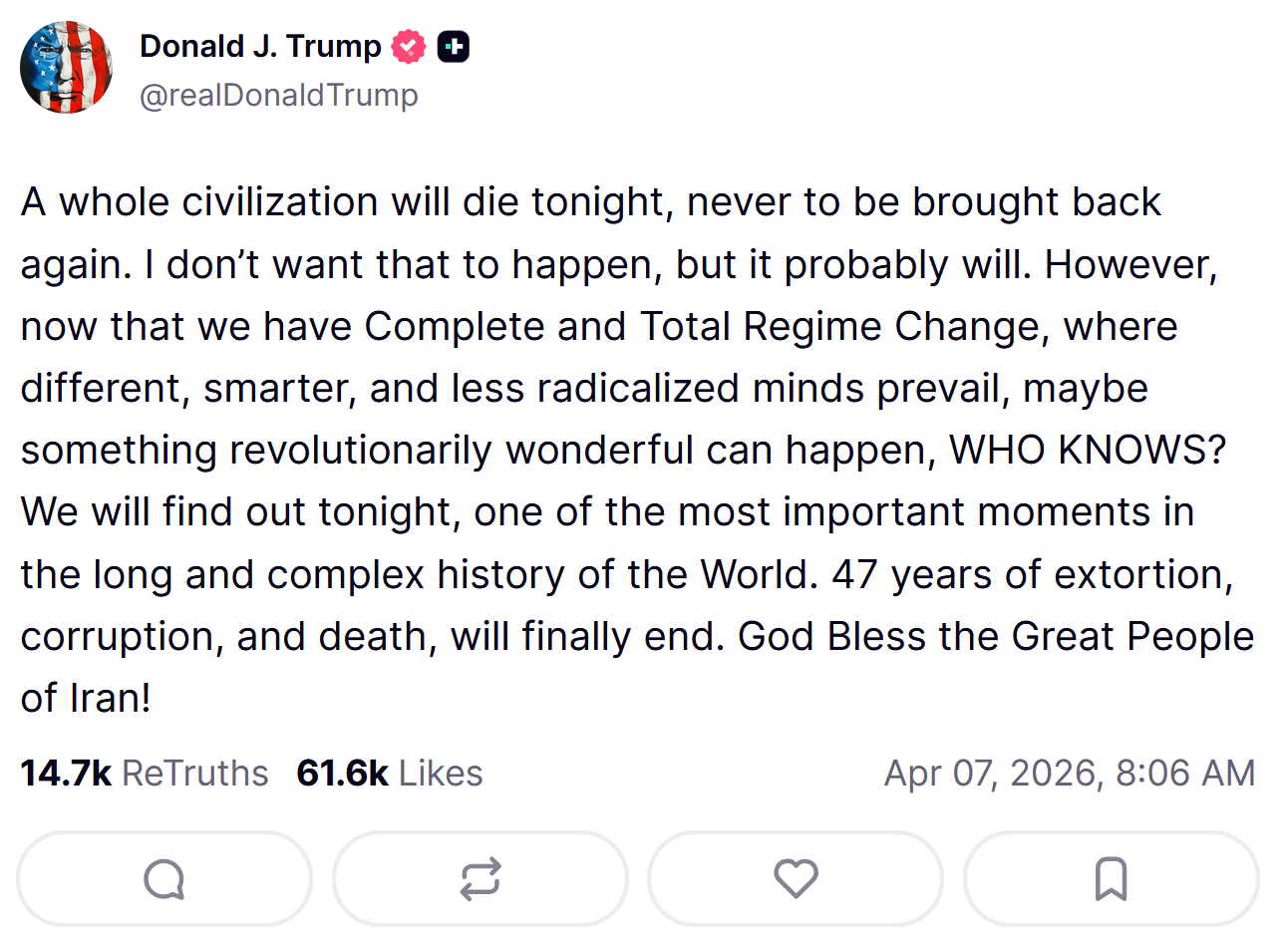
Trump’s ultimatum on Truth Social, April 7, 2026
Trump’s behavior is consistent with a foreign policy strategy theorized by international relations scholars like Daniel Ellsberg and Thomas Schelling. President Richard Nixon attempted it, albeit unsuccessfully, to bring the Soviet Union to the table in 1969 via threats of nuclear force against North Vietnam.
However, the “Madman Theory of International Politics” only works if the enemy considers the threat credible. Trump explains his own mistake in the “Art of the Deal”: “You can’t con people, at least not for long. You can create excitement, you can do wonderful promotion and get all kinds of press, and you can throw in a little hyperbole. But if you don’t deliver the goods, people will eventually catch on.” There was considerable panic surrounding Trump’s existential threat on April 7. Nobody paid any mind on Sept. 1.
It is no revelation that Trump’s strategy no longer generates credible deterrence. The risk that most observers are not discussing, however, is what happens when the president decides to get serious about escalation. Returning to the “boy who cried wolf” parable, the wolf does eventually show up. But the townspeople no longer took the warnings seriously, leaving them unprepared and at the mercy of the predator. If the Iranians underestimate Trump and push him too far, he may finally make good on his promises. What the war has cost so far would pale beside the price of that miscalculation.
All images sourced from Wikimedia Commons under Creative Commons 4.0 License
