
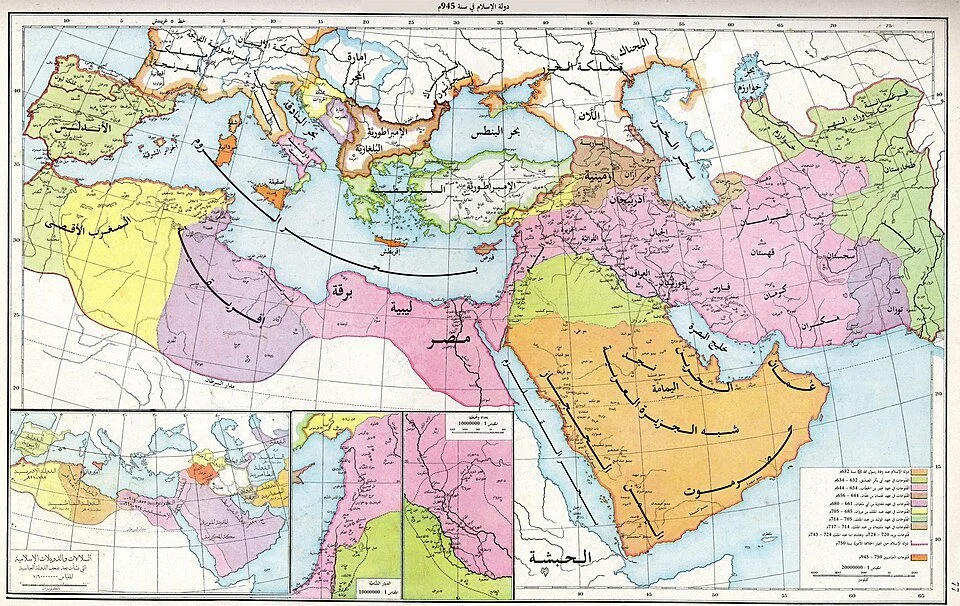
Map of Arabic by dialect speaking regions
Diglossia is a linguistic concept found in some of the world’s most spoken languages, describing a phenomenon in which a single language community speaks two dialects or languages. The most well-known example is Arabic, where speakers are typically fluent in both Modern Standard Arabic (MSA) and a regional dialect. Arabic is best described as a dialect continuum, where geographically adjacent dialects are fairly mutually intelligible, while distant dialects are almost completely unintelligible. To this end, MSA connects the Arabic-speaking world by providing a standard language used in literature, news and formal speeches. Unfortunately, many speakers, primarily uneducated ones, are unable to access MSA content, creating a language barrier in one’s own first language. In fact, the 2026 Ethnologue reports that the number of L2 (second language) MSA speakers is around 335 million, and the U.N. estimates the total number of Arabic speakers, including dialects, to be 400 million, meaning over 16% of Arabic speakers do not know MSA.
So why does diglossia actually occur? When languages are spread across large geographic spaces, they will change and develop regional dialects over time, often requiring a standard dialect to bridge other variations. Most often, governments will step in to establish that standard dialect, as seen in China, Italy and West Asia. Importantly, diglossic languages are separated by “high” (H) and “low” (L) varieties. The H variety, such as MSA, is used in formal settings such as literature or media. The L variety is used colloquially in everyday life. Diglossic languages also differ in extremity – certain diglossic languages have nearly identical varieties, whereas others are not even mutually intelligible with one another. While small diglossic differences have small social impacts, large differences can influence literacy and social cohesion. Diglossic languages are typically ones with large dialect continua, such as Arabic, Chinese or Tamil, so certain L variety dialects may be closer to the H variety than others. For instance, Sri Lankan Tamil is far closer to the H variety “Sen Tamil,” than colloquial Indian Tamil.
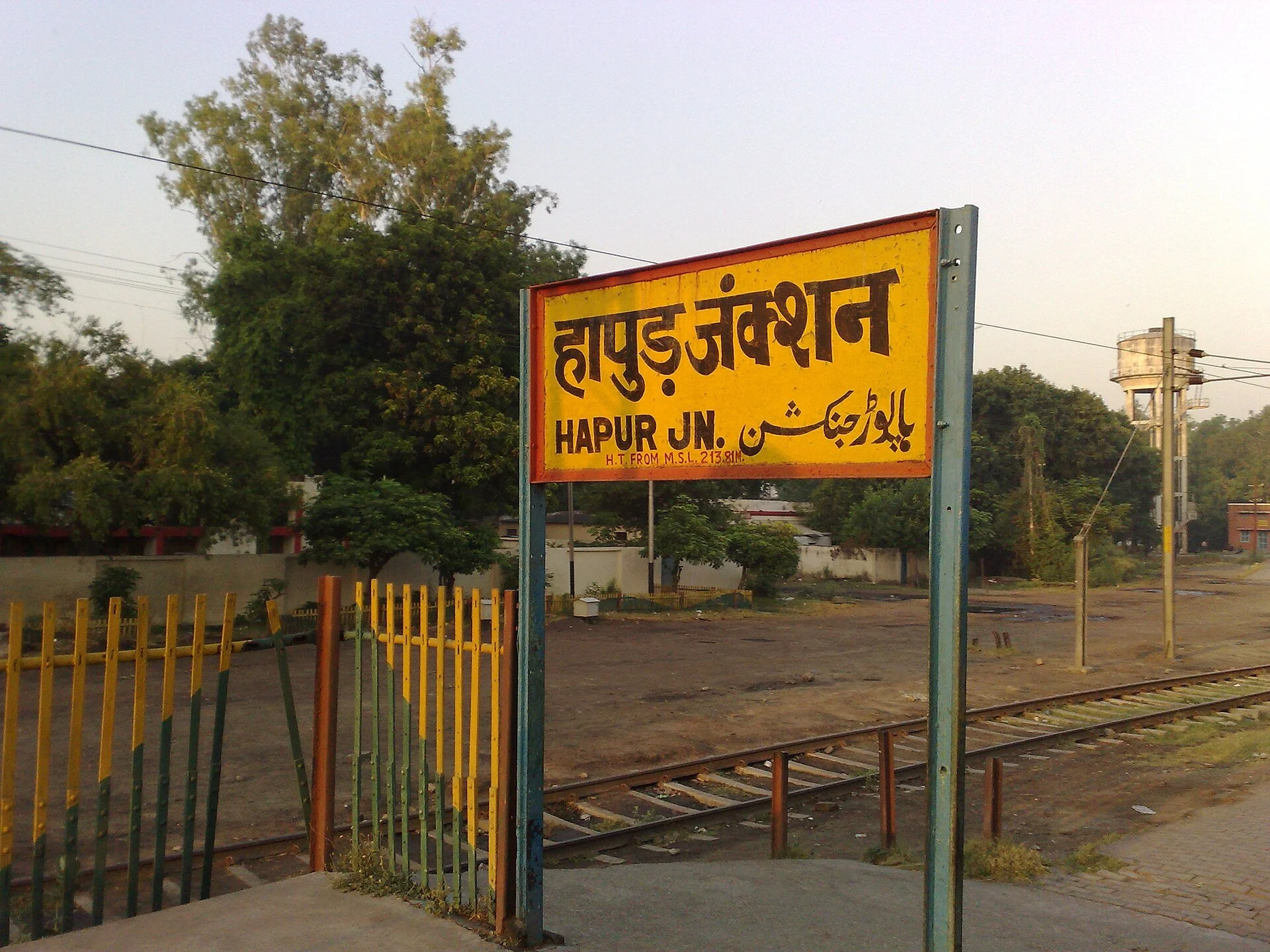
Station board in North India demonstrating different writing systems, Hindi and Urdu, for a common vernacular
While the benefits of a diglossic system may not be immediately clear, there are certainly a few. Firstly, standard dialects allow for synergy across the dialect continuum. Levantine Arabic speakers cannot understand Moroccan Arabic despite speaking the same language; however, MSA provides a means of communication between the two regions. Standard dialects have historically connected different cultures for that reason. Additionally, due to the possibility of extreme differences between L and H dialects, speakers gain the cognitive advantages of bilingualism, which include “improved executive function, longer attention spans and greater cognitive flexibility.” Finally, H varieties can help preserve older forms of the language. In the case of Tamil, the H and L varieties differ greatly, where the H variety preserves the Old Tamil spoken from around 300 BCE to 300 CE.
However, diglossia also introduces a number of issues to a given society. Diglossia can limit access to literacy and formal comprehension, especially in cases of extreme difference between varieties. Naturally, education and development play a significant role in literacy, explaining why Switzerland has a literacy rate of about 99% despite the extreme diglossia of Swiss German. Nonetheless, diglossia creates a clear distinction between formal and colloquial speech, making it nearly impossible for uneducated speakers of a diglossic language to understand the H variety, whether in written or spoken form. Consequently, uneducated speakers are barred from understanding formal speeches, news broadcasts and other crucial forms of information. For this reason, they also face systemic barriers to professional opportunities. Additionally, language learners can be discouraged from pursuing diglossic languages due to the difficulty of learning two distinct dialects. The demand for learning is critical to a language as it opens opportunities for international communication, increases the necessity for study materials in that language and creates cultural awareness. Finally, H varieties can hold prestige over L varieties, resulting in stigma against the colloquial dialect and a sense of shame surrounding the language, which can be identified in countries such as Haiti.
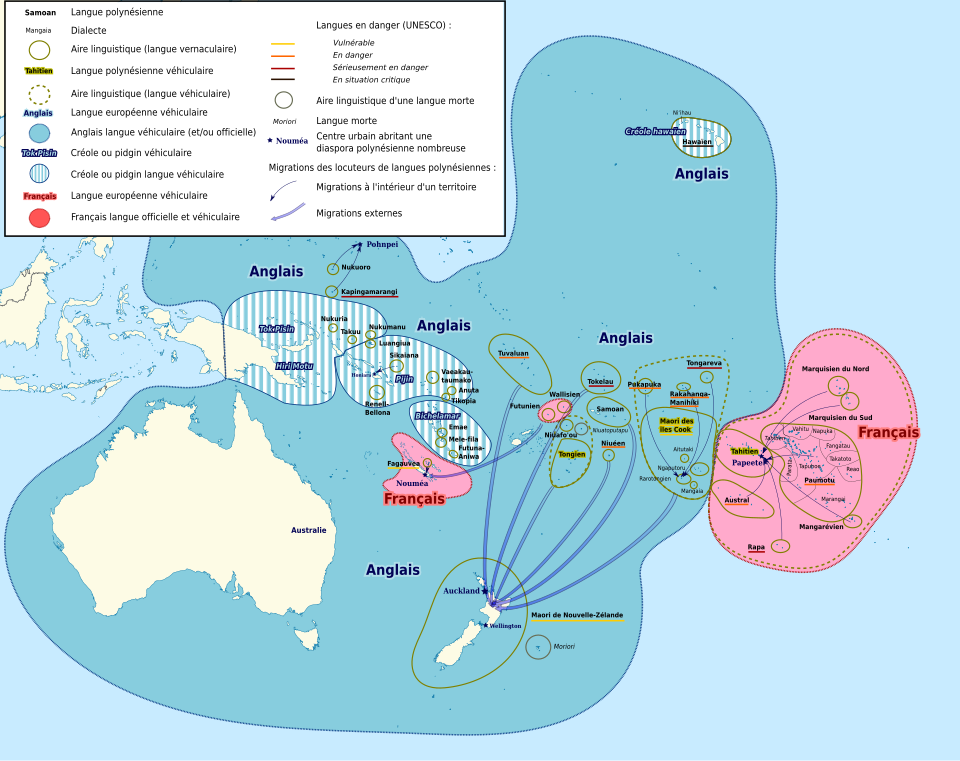
Sociolinguistic map of Polynesian languages in the 21st century
Diglossia is ultimately a natural linguistic feature, arising out of a language’s constant change. Standard languages certainly bridge dialectal gaps and can create national unity. However, as extremity increases in a language’s diglossia, the inequality gap also widens. Thus, a state must either recalibrate its standard language or push education efforts. Diglossia complicates the sociolinguistic landscape for states and people, splitting the collective identity of a language into two deeply influential halves: the language of the people and of the state.
All images sourced from Wikimedia Commons under Creative Commons 4.0 License